 [1]
[1]
By John Helmer, Moscow
@bears_with [2]
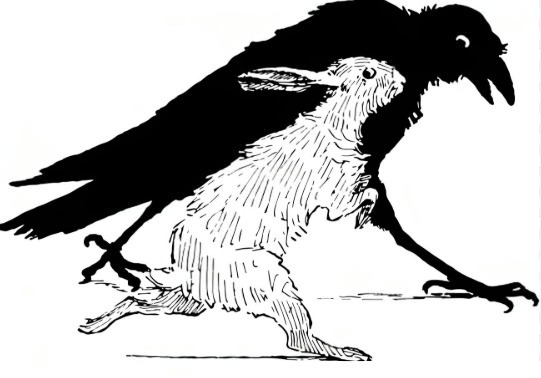
As bird brains go, President Donald Trump doesn’t have what it takes to match an American crow.
Trump, combined with Stephen Miller, spokesman and mastermind respectively, of genocide against the enemies of the Jews in the Middle East and the enemies of the Republican Party at home, still doesn’t remember where exactly he put his war aims against Russia, Iran, China, North Korea, and Cuba, or his peace agreements, term sheets, memoranda of understanding, summit declarations, and Anchorage formulas.
By contrast, Clark’s Nutcracker [3] – a member of the crow species native to western Canada, California, and New Mexico – can place 33,000 pine seeds in 2,500 different locations and recall them for retrieval when he’s hungry over an interval of at least 12 months. More — the bird continues to learn new lessons; its brain keeps evolving, grows larger and smarter. More seeds, more hiding places, more biding time. This is according to a study of avian intelligence by Louis Lefebre; it’s just been published [4] in time for November Election Day when US voters should decide for themselves on Trump – whether his brain can be trusted to remember where he has hidden what he’s been taking from Americans and everyone else in the world.
For a review of the brain of President Trump, handicapped by no neurological abnormalities according to the White House physician, peck here [5].
The evidence of how that brain works can be followed in the tweets and talking points which Miller drafts for Trump to sign his name to every day. Repeating them is a symptom.
“Republicans should add Iran to the Russian Sanctions Bill. That’s what Lindsey [Graham] wanted to do, and it was going to happen. IMPORTANT!!! President DJT,” Trump tweeted [6] three times — on Sunday morning and then twice on Sunday afternoon.
At almost the same time, Trump tweeted [7] his endorsement of his former national security advisor writing in a local paper that Trump’s war against Iran is a sideshow, almost over, as Trump “begins the process of reorienting American grand strategy away from the Middle Eastern conflicts that have characterized the first quarter of the 21st century and toward the great power rivalries that will likely define the next.” “America is on track to emerge from Operation Epic Fury in a far stronger position to win the competition that will define the remainder of the 21st century,” the advisor repeated [7] with Trump symptom.
At the same time, Trump ordered [8] eight waves of aerial bombing and missile attacks on Iranian targets.
“Next week [July 20-26], it gets really bad for them,” he added [9] in an interview, repeating his verbs and nouns. “We’re gonna hit ’em very hard tonight. We’re gonna hit ’em very hard tomorrow night. We’re gonna hit ’em very hard the night after. And then next week, it gets really bad for them, because next week comes the, uh, power plants. Next week comes the bridges. We’re gonna knock out all their power plants, we’re gonna knock out all their bridges, unless they get to the table and negotiate.”
A few hours later, in another interview [10] Trump found the strategic rationale for losing the battle and winning at the same time. “[Question] are you concerned, though, that renewed operations in Iran might turn that around, or is that going to be a trend? Well, look, we’re making a lot of money. The defence companies are doing great. It’s jobs. It’s all jobs. I’m not doing this for jobs. But when you think of it, we make our own equipment. We make the best military equipment in the world. What I do want to do is make it faster, because we need it, but allies need it.”
“It’s jobs. It’s all jobs. I’m not doing this for jobs” – repeat, contradict, repeat again. These are wars which Trump keeps fighting in order to discover by repetition that he isn’t losing them.
How then must President Vladimir Putin fight an enemy who plans to be making profits for the foreseeable future in dozens of wars to pauperize and beggar every potential competitor, across every regional front including Russia in Europe, in the Caucasus, Central Asia, and the Arctic, and including the big one, that’s the war against China?
The answer to this question starts with Putin’s performance in answering Trump’s jobs and money-making war on the Ukrainian battlefield.
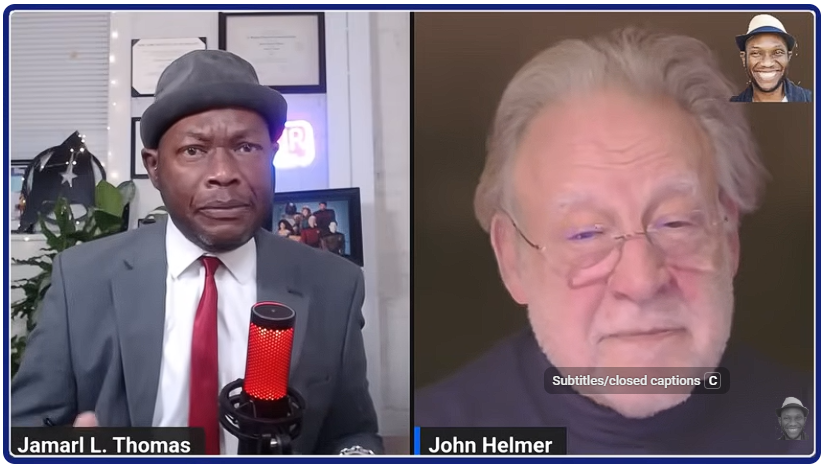
In the new podcast discussion with Jamarl Thomas, the strategic targets of the Russian General Staff are identified – (1) deliveries; (2) guidance; (3) electricity. That’s one, two, three.
The reason and the power in domestic politics which have been restricting the General Staff from pursuing this one-two-three strategy and hitting these targets are also identified – state mobilization of capital and manpower threatens the Russian oligarchy on which Putin depends more than the Special Military Operation as Putin has been directing it.
Click to view or listen: https://www.youtube.com/watch?v=eF8_d-WjGfk [11]
 [12]
[12]Source: https://www.youtube.com/watch?v=eF8_d-WjGfk [11] Broadcast live from 7am New York time on July 16.
There are two additional questions of strategy for assessing Putin’s performance:
- What is Putin saying, what is he allowing the General Staff to do to aid his geopolitical allies in their defence against Trump’s other war targets — Iran, China, North Korea, Cuba?
- What is the Kremlin encouraging (allowing) the state think tanks, universities and expert advisors to say are the vulnerabilities of Trump’s economy which Russia should be attacking in the way Iran has been attacking the Hormuz Strait regime; and in retaliation, tit for tat, for the US think-tank plans for destroying the Russian economy which Trump has been pursuing?
 [13]
[13]Source: https://www.rand.org/content/dam/rand/pubs/research_briefs/RB10000/RB10014/RAND_RB10014.pdf [14]
 [15]
[15]Source: https://www.csis.org/analysis/russian-blood-and-treasure-ballooning-costs-putins-war [16]
 [17]
[17]Source: https://www.hudson.org/sanctions/six-steps-sanction-russias-war-economy-nate-sibley [18]
 [19]
[19]Source: https://www.kielinstitut.de/ [20]
With all the intellectual freedom which Russians have won from Communist Party control since 1991, and with all the resources the state has spent on educating a new intelligentsia and empowering the military-industrial complex since 2000, what can explain the outcome?
Searching all the locations – SVOP* [21], RISS [22], RIAC [23]*, IMEMO [24], VDC [25] — in which the answers to these questions have been carefully placed for retrieval, there is no Russian discussion of the options for counter-attack on the vulnerabilities of the Trump economy. That’s to say, zero, none, ничего.
[*] A search of the sanctions lists of the US Treasury’s Office of Foreign Assets Control (OFAC) reveals that Sergei Karaganov, head of SVOP; Fyodor Lukyanov, head of RIAC’s publication and research director of VDC; and the others running research for RISS and IMEMO have not been sanctioned. According to German and other European media reports [26], Karaganov owns apartments in Berlin and Venice.