 [1]
[1]
By John Helmer, Moscow
@bears_with [2]
In the pre-dawn hours of March 4, the Iranian frigate, Islamic Republic of Iran Ship (IRIS) Dena, was racing eastward on the Indian Ocean. From the southwest, a tailwind of 7 knots and swell of 1.5 metres added to the Mowj-class vessel’s top speed of 30 knots. At coordinates 6.0073 degrees North , 79.8654 degrees East, the Dena was 9 nautical miles (nm) outside Sri Lanka’s territorial waters; 19 nm west of the harbour of Galle, a port on the southwestern coast of the island.
It was 05:06 local time. Dawn was an hour away. On the bridge of the Dena the clock and speed log showed that in just 18 minutes the vessel and its crew would be safe from US pursuit and attack.
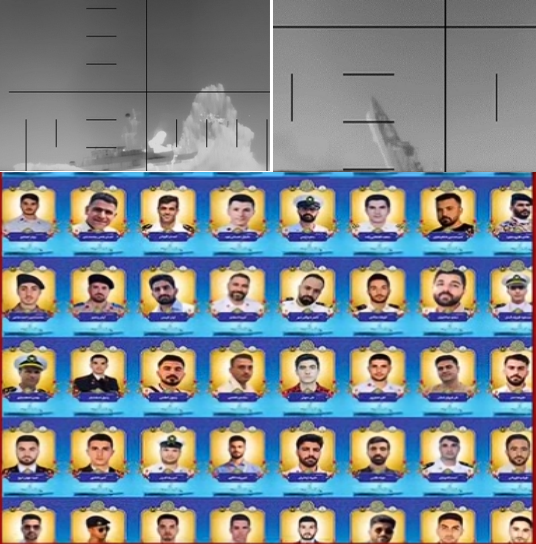
That was when a US Navy submarine, the USS Charlotte, fired two torpedoes. One missed; one struck the Dena, holed the bow section, triggered an internal explosion, and sank the ship within three minutes (lead image, top). Of the crew’s 180-man complement, 32 were rescued alive by the Sri Lankan coast guard; 87 bodies were recovered from the water; 61 were lost. Altogether, 148 were killed (lead image, below).
In the Pentagon briefing which followed [3], Secretary of War Peter Hegseth said [4]: “an American submarine sunk an Iranian warship that thought it was safe in international waters. Instead, it was sunk by a torpedo, quiet death.” Hegseth intended to reveal that the position of the Dena was “in international waters”. He did not mean to reveal the US had been listening to the Dena’s communications as it was transmitting, live. The reason the Dena was reporting it was safe was that it was just 18 minutes from Sri Lankan territorial waters.
The order to catch and kill the Dena had been issued earlier. It required the Charlotte to intercept the course of the Dena before it reached Galle — before it reached Sri Lankan territorial waters. The Charlotte almost missed the interception point and almost missed the target. The Dena almost reached safety.
The reason for both outcomes is that the Prime Minister of India, Narendra Modi, and the Foreign Minister, Subraymanyam Jaishankar, had refused to allow the Dena to enter an Indian port when Jaishankar has acknowledged the request was made on February 28. According to Jaishankar’s statement on March 6 [5], also reported by the BBC on March 9 [6], the safe harbour request was made for the Dena and its two escorts, IRIS Lavan [7], a landing ship, and IRIS Bushehr [8], a cadet training and replenishment vessel, According to Jaishankar, only one vessel was allowed sanctuary at Kochi, on India’s west coast; this was the Lavan.
“ ‘The Iranian side had requested permission on 28 February for three ships in the region to dock at our ports. This was accorded on 1 March,’ Jaishankar told [6] parliament on Monday. ‘Iris Lavan actually docked on 4 March in Kochi. The crew is currently in Indian naval facilities. We believe that this was the right thing to do.’”
There has been no Indian explanation and no Indian media reporting of what transpired between February 28 and the morning of March 4, when the Dena was attacked and sunk.
The available evidence suggests that the refusal on Modi’s and Jaishankar’s orders forced the Dena to reverse its course from off the western Indian coast near Kochi and sail southeastwards for more than three days, February 28 to March 3. In that three-day interval, Indian naval intelligence on its position and communications was relayed to the US, on Modi’s direction. The Indians also reported to the Americans the communications they were receiving from the Iranian embassy in New Delhi and from Iranian officials in Teheran. The two senior Indian officials also added to the pressure from the US and also from Israel on the Sri Lankan Government to delay its decision on the Iranian request for sanctuary, all the while lying to Iranian officials in Delhi and Teheran.
These actions make Modi and Jaishankar complicit in the US submarine action; they are culpable as accessories in the murder of the Dena’s crew. This is an Indian war crime.
The crime is compounded by the cover-up or destruction of the evidence , ordered by Modi and his subordinates, of maps, course location data, ship-to-shore communications, and the time sequence from February 25, when the Dena and its escorts, the Lavan and Bushehr, left the east central Indian port of Visakhapatnam, headed for their home port in Iran.
In a press statement on March 5 [9] by the Sri Lankan President, Anura Dissanayake, and a subsequent speech he made to parliament on March 20, it was revealed that on February 26, two days before the war began, Iran requested sanctuary in Sri Lanka for all three Iranian Navy ships.
“A request was made to us,” Dissanayake said [10], “on 26 February, 2026 for three naval ships to visit Sri Lanka on 9 and 13 March as part of a goodwill visit aimed at strengthening cooperation. We were in the process of reviewing this request for approval. On the same evening, the United States also requested permission for two warfare aircrafts to land at Mattala International Airport in Sri Lanka. We took a clear and firm decision based on our policy of maintaining neutrality. At that time, there were already indications of escalating military tensions. Consequently, we did not grant approval for either of these requests. Some questioned why permission was not granted for the Iranian vessels. Had we done so, it would have compromised our overall neutrality. Furthermore, it would have brought a military conflict, which was distant from our region, closer to Mattala and the Port of Colombo. Regardless of the pressures faced, we acted to safeguard the country and preserve our neutrality. ”
Dissanayake’s admission reveals that the Iranian request for safe harbour preceded by two days the February 28 sanctuary request to India. The Sri Lankan evidence suggests that after the February 26 refusal from Colombo, the Dena sailed on towards Kochi as Iranian officials tried to negotiate with Modi and Jaishankar.
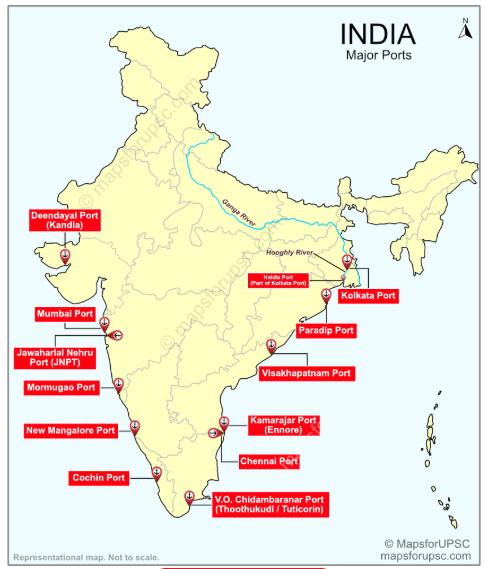
Earlier in February, the Dena. Lavan and Bushehr had sailed from their homeport at Bandar Abbas, in the Persian Gulf. They had been invited by the Indian government to participate in Milan 2026, an international naval review, parade, shore meetings, and sea drills organised by the Indian Navy at Visakhapatnam, on the eastern coast of the country.
 [11]
[11]The review and exercise began on February 15 and concluded ten days’ later, on February 25. The list of ships [12] did not include China, which had participated in earlier Indian reviews.
Russia and the US also participated [13]. However, the planned arrival of the US Navy destroyer, the USS Pinckney, enroute from Singapore [14] was cancelled [15] at the last minute “for undisclosed operational reasons. It would have been embarrassing for the Indian hosts to have had Pinckney moored alongside IRINS Dena, should war have broken out with Iran during the period of the fleet review.”
The US Navy sent a helicopter and a maritime patrol aircraft instead. The Russian Navy was represented by the frigate, Marshal Shaposhnikov [16].
An official Indian press release reported: “held under the theme ‘Camaraderie, Cooperation, Collaboration’, MILAN 2026 witnessed participation on an unprecedented scale, comprising 42 ships and submarines and, 29 aircraft. These also included 18 ships from the participating Friendly Foreign Countries. Further, apart from integral helicopters onboard the Friendly Foreign Country ships, maritime patrol aircraft from France, Germany and USA also participated.”
 [17]
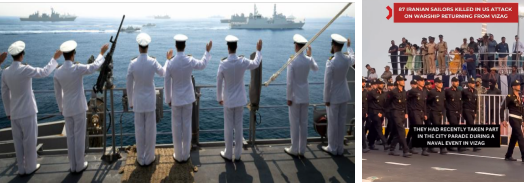
[17]Left, the sea review from the deck of an Australian frigate; right, the Iranian march past. Sources: https://www.defence.gov.au/news-events/news/2026-03-04/warramunga-strengthens-ties-india#:~:text=like%20to%20search?-,Warramunga%20strengthens%20ties%20in%20India,and%20aircraft%20from%2074%20nations [18] and https://www.instagram.com/reel/DVfnft9j5TY/ [19]
The Iranian squadron arrived at Visakhapatnam on February 16; marched in the shore parade; and left port on February 25.
From then until the sinking of the Dena on March 4, there is no Indian, Iranian, American, Sri Lankan or other public record of the course the frigate and its escorts took; no confirmation that they sailed in convoy together or apart, according to their different cruising speeds. The cruise and top speeds on record for the Dena are 20 knots and 30 knots per hour; for the Lavan, 12 knots and 15 knots per hour; for the Bushehr, 16 knots and 20 knots per hour.
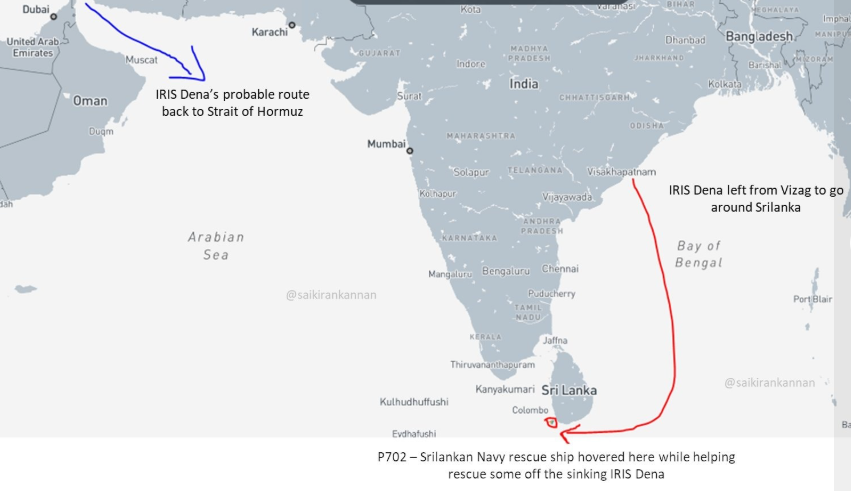
The only map found to date for the southward course they took is this one which appeared on Facebook from an Indian publication called [20] The Trident, Military and Space.
 [21]
[21]Source: https://www.facebook.com/photo?fbid=1348376713979236&set=a.418138590336391 [22]
The same source published the Indian Navy announcement of the Dena’s distress call at a position 20 nm west of Galle. https://www.facebook.com/photo?fbid=1349118160571758&set=a.418138590336391 [23] According to this Indian publication, the USS Charlotte “was probably coming off somewhere around Port Diego Garcia, about 1,600 km (1,000 miles) southwest of Sri Lanka.” With an underwater cruise speed of about 30 knots, the US submarine would have taken about 33 hours from Diego Garcia to the attack position off Sri Lanka.
A retired Indian Army officer, Lieutenant General Raj Shukla, was asked [24] by a reporter to explain why the US had struck the Dena “so close to the Indian coast. They could have hit it when the ship went closer to the Iranian coast.” Shukla replied: “They are signaling to us. And to China [that] we [US] have a global presence. Don’t mess with us anywhere.” That was on March 17. Shukla appears not to have known that the Iranians had been requesting safe harbour from both India and Sri Lanka, and that the timing of the attack was to prevent Dena from reaching it.
Another retired Indian officer, former chief of naval staff, Admiral Arun Prakash told [25] the Guardian: “The US navy could have sunk this ship anywhere on the way back to the Persian Gulf. We are supposed to be friends and partners of the USA. To bring the war to right to our doorstep was a perverse act. They could have delayed this action to spare India this embarrassment.”
Was it embarrassment for the Indian Navy or the senior ministers? Prakash was speaking on March 16. He ought to have known what had happened in Delhi from February 28, when Foreign Minister Jaishankar has admitted the request for sanctuary in Kochi. To be precise, Jaishankar exact words were: “The Iranian side had requested permission on 28 February for three ships in the region to dock at our ports. This was accorded on 1 March.” Ports plural, Jaishankar told parliament. He wasn’t lying but he was intending to deceive. He was omitting to say that the Dena had been refused safe harbour, not only at Kochi on the west coast, but also at Tuticorin (Thoothukudi) on the southeast coast.
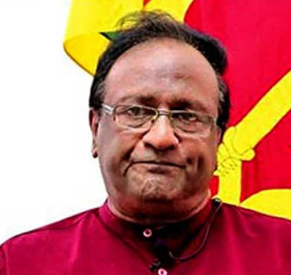
According to an account of events given [25] by reporters in Colombo to the London newspaper on March 16 by Rear Admiral (retd) Sarath Weerasekara, a former chief of staff of the Sri Lankan navy and presidential advisor: “Iran had requested permission from Sri Lanka to make a friendly port call on the way home. It had three ships in its flotilla; IRIS Dena, a support ship IRIS Bushehr and a landing ship, IRIS Lavan. The Lavan was later granted permission to dock in India instead, after it experienced technical difficulties en route. Though a port call was standard procedure in the past, the US war on Iran made this a highly precarious geopolitical situation for Sri Lanka. Even as Dena and Bushehr set sail for Sri Lanka, the official permissions for it to come to Sri Lanka’s shore had still not been granted by the government. It was still not approved by 3 March, as Dena reached the outskirts of Sri Lanka’s territorial waters. According to Weerasekara, the ship was left waiting for more than 11 hours, a delay that would prove deadly by the morning of 4 March.”
 [26]
[26]“ ‘We did not take any prompt action,’ said [27] Weerasekara [28]. ‘We could have saved those lives also. This has been discussed in the [Sri Lankan] security council and yet no action has been taken.’ In the aftermath of the attack, Sri Lanka agreed to allow Bushehr to dock late on 4 March, amid fears it too would be hit.”
Weerasekara’s account of the delay in his government’s decision-making on the Iranian request from February 26 conflicts with President Dissanayake’s version, announced ten days earlier, that the request had been refused. It is therefore unclear what course the Dena took to Kochi and whether it remained near Sri Lanka or returned to Sri Lanka from a position off Kochi.
No Indian official, active or retired, has been as explicit as Weerasekara in condemning the delay in responding to the Iranian requests for safe harbour.
In the absence of credible course plots and maps for the Iranian squadron and the lack of direct source evidence, this report of the events leading up to the sinking of the Dena and the port arrivals in Kochi for the Lavan and Colombo for the Bushehr is a reconstruction based on the evidence that has been documented here.
Indian media have speculated that there was a direct meeting between Prime Minister Modi and the Indian Navy chief, Admiral Dinesh Tripathi, either just before the March 4 sinking, or just after. There has been no confirmation of this. At the last of their meetings, reported in May 2025 [29], the other officials attending including National Security Advisor Ajit Doval, Defense Minister Rajnath Singh, and the chief of the Defence Staff, General Anil Chauhan. It is near certain that Modi, Doval, Jaishankar and the military and intelligence chiefs met for briefings and policy discussions immediately after the US-Israeli attack began on February 28. By then they knew the Iranian squadron was seeking sanctuary.
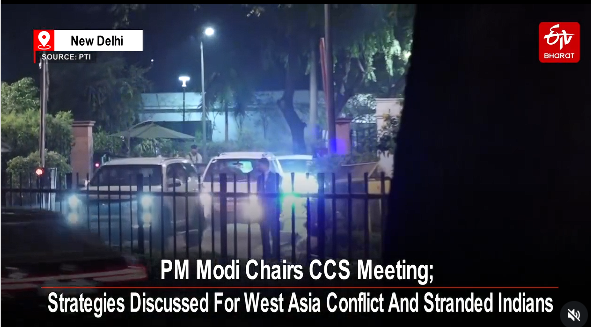
Modi is reported [30] to have held meetings of the Cabinet Committee on Security on March 1 and 2 at which Jaishankar and Defense Minister Singh were present. No photographs have been published to identify the other attendees.
 [31]
[31] Source: https://www.instagram.com/reel/DVXV-xCjZxF/ [32]
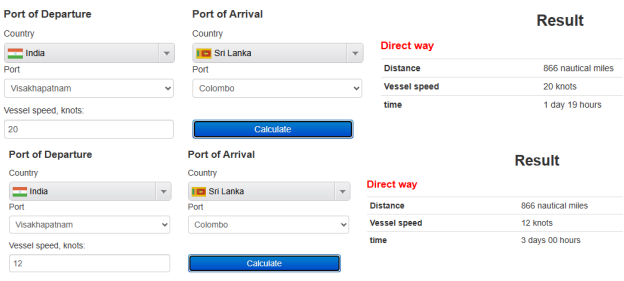
Without position and other corroborated data, the following calculations have been made with internet sailing distance and speed estimates [33] on the assumption that the Iranian squadron’s orders as they departed Visakhapatnam on February 25 were to take the most direct course south and then west for their return to Iran. They are also likely to have been ordered to remain as close to the coastlines as possible. Their most likely route through the Bay of Bengal to the Indian Ocean would have been through the Palk Strait, between India and Sri Lanka.
In this calculation, from Visakhapatnam to Colombo on Sri Lanka’s west coast, sailing time would have been one to three days, depending on the squadron’s cruising speed – 20 knots for the Dena, 12 knots for the Lavan.
 [34]
[34]Source: https://sea-distances.org/ [33]
If the squadron had avoided the Palk Strait and turned on to a southeastern bearing to go around Sri Lanka’s eastern coast, the target destination would have been Trincomalee. The sailing time required from Visakhapatnam to Trincomalee would have put the Dena there within 24 hours. That is February 26 — when the request for sanctuary was first recorded by the Sri Lankan presidency.
From there to Kochi, on India’s western coast, the estimated voyage time required at Dena’s cruise speed was 24 hours.
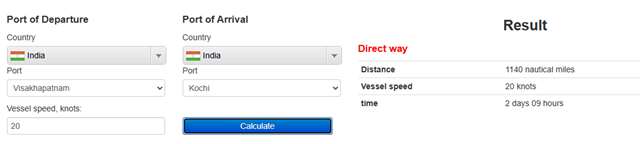
If the Dena had taken the westward course through the Palk Strait, between the Indian and Sri Lankan coasts, then from Visakhapatnam to Kochi by sailing at 20 knots/hour, the sailing time for the Dena should have been a little more than 2 days.
If the Dena had slowed down for the Lavan and Bushehr to keep in formation, then another two days of sailing time would have been required.
 [35]
[35]At the slow sailing speed, the trio should have been off Kochi on February 28 – the date Jaishankar has confirmed as the Iranian request for sanctuary:
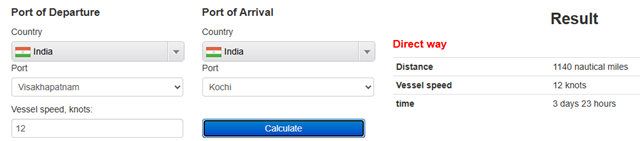 [36]
[36]However, the Indian record [37] is that that only one vessel, the Lavan, was granted access to Kochi, but that record is silent on when exactly the Lavan entered Kochi. The Indian press reporting claims that the Lavan did not enter Kochi until March 4 – that is after the Dena had been sunk. The India media have not noticed the discrepancies in time and vessel permissions [38].
Jaishankar has not explained the delay nor why the Lavan was permitted and the Dena and Bushwehr were not. There is no clarity in the Indian or Sri Lankan record – the public record which government officials have produced after the US attack — on where each of the Iranian trio was on February 28. There is no evidence on what happened in the almost four days at sea for the Iranian squadron between February 28 and the sinking of the Dena on March 4.
Why the four days of delay?
Answer: the Iranians understood that the Indians and Sri Lankans were under pressure from the US to delay and refuse. Admiral Weekaseera has commented that the Sri Lankan Security Council’s delay was a betrayal. Teheran is likely to have suspected Indian betrayal after the support Modi had declared for the Israeli and American war. The Dena’s orders were not to attempt to head westwards to Bandar Abbas. It is therefore concluded that off Kochi, the Dena reversed course to sail eastward away from the war. It was then heading either to Tuticorin (Thoothukudi), India, or Galle, Sri Lanka. Refused entry again by Modi and Jaishankar for the Indian port, the Dena must have been hoping for safe harbour at Galle:
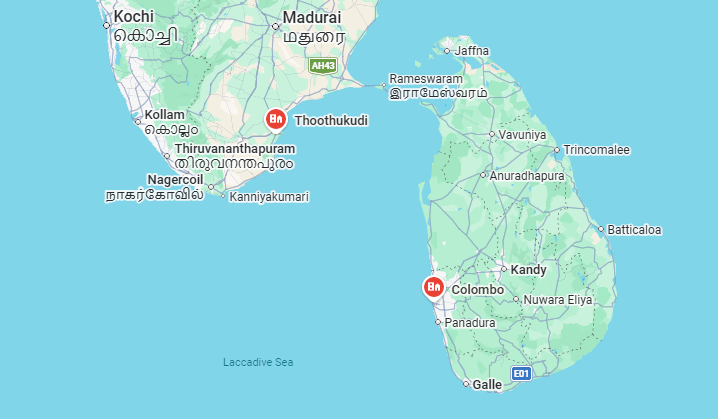 [39]
[39]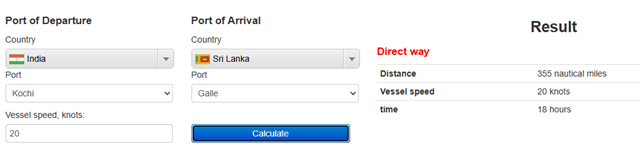 [40]
[40]The sea distance between Kochi and Tuticorin (Thoothukudi) is 172.3 nm – that is half the distance for the Dena to have reached Galle; at 20 knots, 8 hours 39 minutes.
The Indian Navy knew the vessel was sailing away from the war. The Americans knew. The Americans decided to kill the Dena and its crew before – minutes before –they reached safety.
A different account of these events has been published by the anti-regime propaganda agency in London, Iran International. It claims [41] the Charlotte had issued a warning to the Dena’s captain to abandon ship before the attack, and that he had refused. A Reuters report claims [42] that “a U.S. official, speaking on condition of anonymity, told Reuters… the United States did not provide a warning before carrying out the strike.”
Reuters has also reported [42] from a secret State Department cable from “Jayne Howell, the chargé d’affaires at the U.S. embassy in Colombo, [who] had emphasized to Sri Lanka’s government that neither the Booshehr crew nor the 32 Dena survivors should be repatriated to Iran. ‘Sri Lankan authorities should minimize Iranian attempts to use the detainees for propaganda’ the cable says.”
Reuters also reports that the US chargé in Colombo coordinated her actions towards the Iranians in Sri Lanka with the Israeli Ambassador to India, Reuven Azar. He is also accredited [42] as Israel’s Ambassador to Sri Lanka but is not resident there. In Delhi, where Azar is resident, it is likely he also coordinated his action with the US Embassy and with Jaishankar’s ministry.
On the evidence of their explicit action and calculated inaction, Modi and Jaishankar condemned the Dena to the fate they knew the Americans intended. “Quiet death” US War Secretary Hegseth called [4] it. Indian murder, not so quiet.