 [1]
[1]
By John Helmer, Moscow
@bears_with [2]
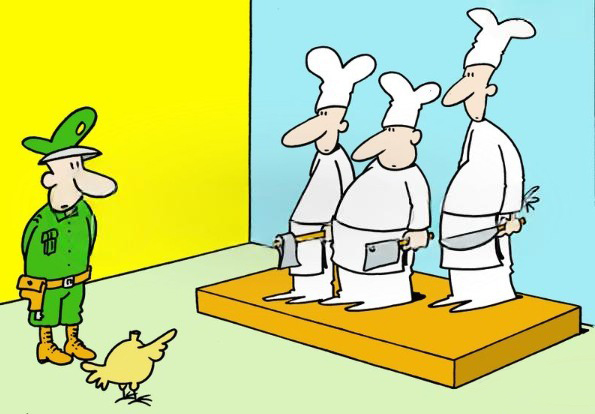
Easter came early this year with good news.
In the first three months to March 31, exports of fresh Russian chicken eggs increased by 21% over the same period of 2025. Mongolia and the United Arab Emirates (UAE) were the leading importers. How exactly the UAE landed the eggs is unclear since air traffic was limited by the war against Iran and the Hormuz Strait closed to cargoes heading for UAE ports.
The politics of Russian eggs has been salutary for President Vladimir Putin.
In December 2023 [3], in his annual question-and-answer review of the year, he apologized to two pensioners who complained at the sharply rising price of eggs and chicken meat. “ ‘It is very sad to buy eggs in our country,’ grieves Andrei Samoilov from the Tomsk Region. Anastasia Plastinina from Ivanovo asks: ‘Are these eggs laid by golden hens or what?’ ”
Putin replied: “I am sorry about this and want to apologise for this problem. This is a setback in the Government’s work. Although they say this is not the case, I still think it is – the problem is related to a failure to increase imports enough. Apparently, they hoped to make more money, but they promised to fix this soon.”
The president also had this explanation [3] to demonstrate the grip he held on the laying hens of the country in wartime. “This is what happened. As I said, we had a slight increase, but still an increase in income, the level of salaries and so on. The demand went up. This is a relatively cheap source of protein; it is popular with people. I am happy to eat scrambled eggs myself, and at one time, I could easily gulp down ten at once in the morning. But what happened? Demand grew but production did not. This is the first point. The second point. Imports were not started soon enough or in the needed volumes. Incidentally, some Turkish companies are now offering us additional imports. We are developing our economic ties, including in agriculture, very well. Other countries, including Belarus, also have proposals. But we didn’t start our imports on time. We should have resolved these problems within the EAEU [Eurasian Economic Union]. Decisions were made, I think the other day, but at any rate they must be made in December, so the situation is bound to improve – there is no doubt about this. I am hoping for this very much. Because these conversations with the Ministry of Agriculture took place at least two weeks ago.”
Two years later, in the same annual December show, Putin patted himself and the pensioners on the back. “I would note that last year, or the year before, we were critically assessing the actions of our colleagues in the Government when the price of eggs suddenly spiked. Now, prices are not just falling – they have dropped by over ten percent, almost 16 percent. These are also important factors. Nevertheless, without any doubt, we must closely monitor the situation in every segment and across every demographic group.”
For Putin, however, the polls are showing that voter approval of what he says and does is several percentage points lower today than it was last December, and much lower than it was in December 2023. It is just as clear in the Kremlin that one can’t make omelettes without breaking eggs. Scrambled eggs, too. Levada Centre polling shows that when the price of eggs goes up, voter approval of Putin goes down [4]. Never mind that Russian eggs are cheaper [5] than any other European eggs (except Ukraine).
For Putin there has been an egg-before-chicken problem. He was so successful in his promise of December 2023 and order to the Agriculture Ministry, a surge of egg output followed in 2024 and 2025. So many eggs in fact, that supply outstripped demand. When prices fell, as they usually do in such a situation, Russian egg producers started to export their surplus to keep the price stable and their profit margin up [6]. The first Russian eggs began [7] to feed American buyers for the first time in over thirty years – despite the sanctions war.
The pensioners are not complaining to Putin about egg prices now. The egg farmers are complaining instead, as rising costs, low-priced competition from Chinese egg dumping, and low domestic egg prices have crushed [8] the profitability of the farms.
The egg farmers don’t have as many votes at election time as consumers. And in the latest poll of Russian voter intention if the presidential election were called next Sunday, Putin has dropped to 49%. This is far ahead of the current presidential rivals, but it is far below the 68% vote he received in 2024 [4], just before the March election of that year.
He’s been less popular in voter choice – 30% in 2005; 13% in 2008; 29% in 2014 [4]. But this is a parliamentary election year; the next presidential election isn’t until 2030. But presidential succession politics are perennial, especially in wartime.
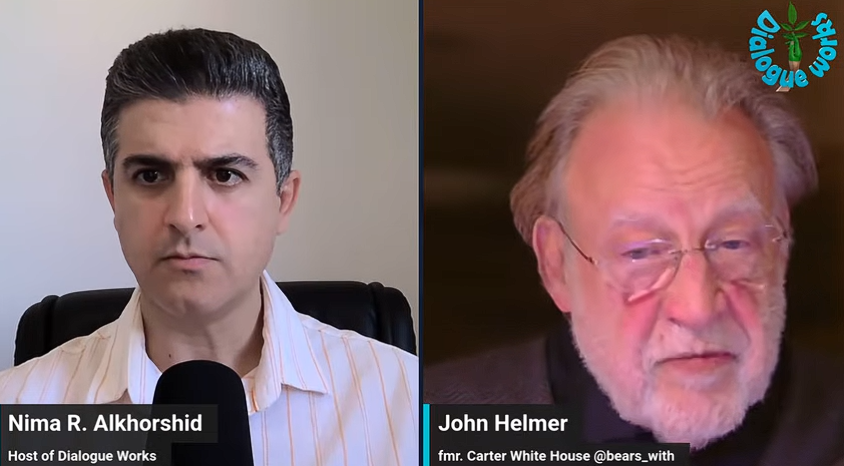
This is a scrambled way of introducing the new podcast discussion with Nima Alhkorshid in which we pick out the good news from the bad news on the several fronts of the war President Donald Trump and his allies are fighting against Iran, Russia, and China.
We start and end the hour-long podcast with a question about China’s intentions towards its allies, and this question about President Xi Jinping and Trump come May 14, when their Beijing summit is scheduled to begin.
 [10]
[10]Source: https://www.youtube.com/watch?v=WLQeC8gOp-k [9]
 [11]
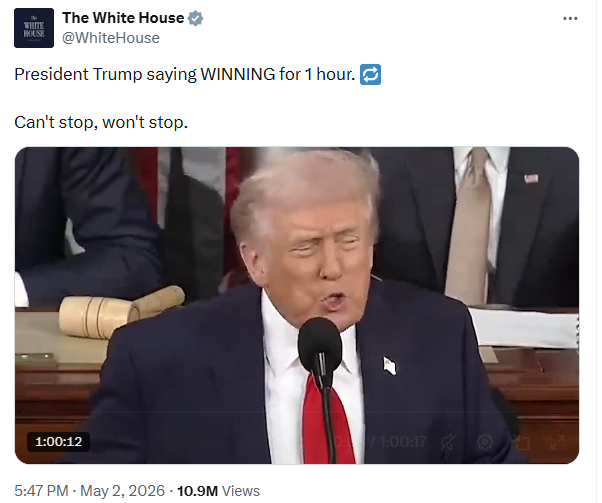
[11]Source: https://johnhelmer.net/the-anchorage-formula-has-been-replaced-by-the-hormuz-formula/ [12] For analysis of this as a symptom of Trump’s medical disability, read this [12].
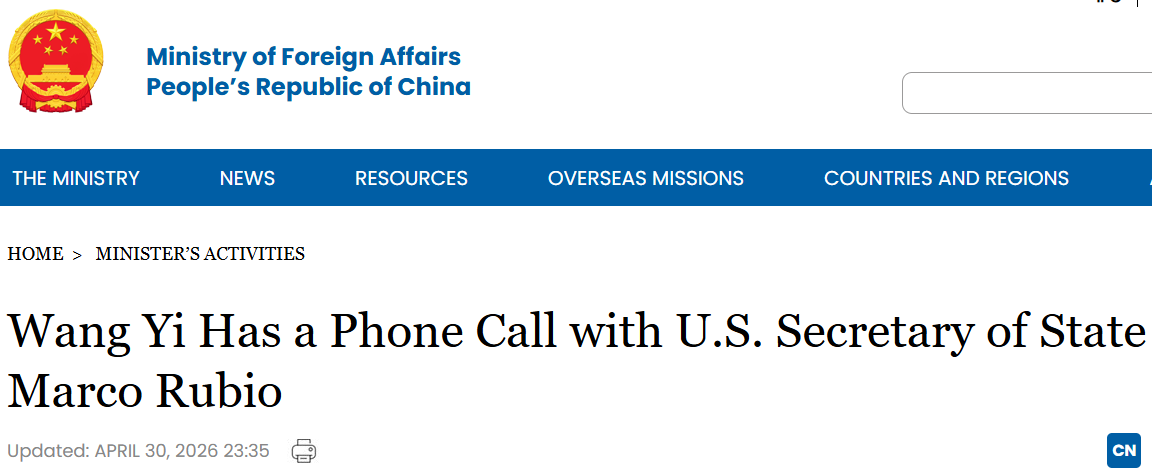
The special Chinese evidence of what deal they are putting on the table for Xi and Trump to announce – Taiwan for Hormuz – can be reviewed here [13].
 [14]
[14]Source: https://www.fmprc.gov.cn/eng/wjbzhd/202605/t20260502_11904259.html [13] “Under the strategic guidance of President Xi Jinping and President Donald Trump, China-U.S. relations have generally remained stable, which serves the fundamental interests of both peoples and meets the common expectations of the international community. Both sides should maintain the hard-won stability, make good preparations for the important agenda for high-level interactions, expand cooperation and manage differences, and explore the building of a strategic, constructive, and stable China-U.S. relationship, so as to achieve mutual respect, peaceful coexistence and win-win cooperation. Wang Yi underscored that the Taiwan question bears on China's core interests and is the biggest risk in China-U.S. relations. The U.S. side should honor its commitments and make the right choice, to open up new space for China-U.S. cooperation and make due efforts for world peace.”
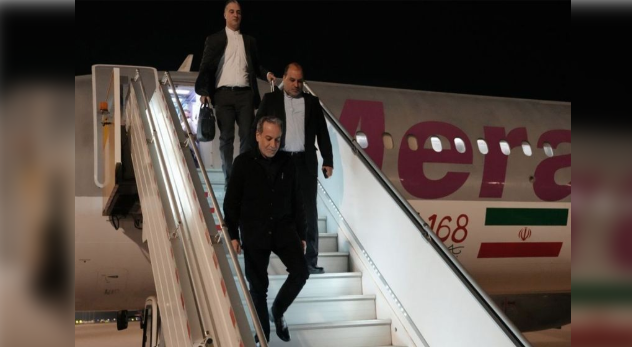
Following the podcast, which concluded on Tuesday afternoon Moscow time, Foreign Minister Abbas Araghchi arrived in Beijing in the early morning hours of Wednesday.
In advance, Araghchi had posted [15] on his Telegram account that the visit is “part of diplomatic consultations with various countries. During this visit, the Foreign Minister will discuss and exchange views with his Chinese counterpart on bilateral relations and regional and international developments.”
 [16]
[16]The Chinese Foreign Ministry confirmed [17] the visit but has had no further comment to make. As of Wednesday morning, Moscow and Beijing time, the Foreign Ministry had not resumed its daily press briefings; the blackout began after April 30 [18].
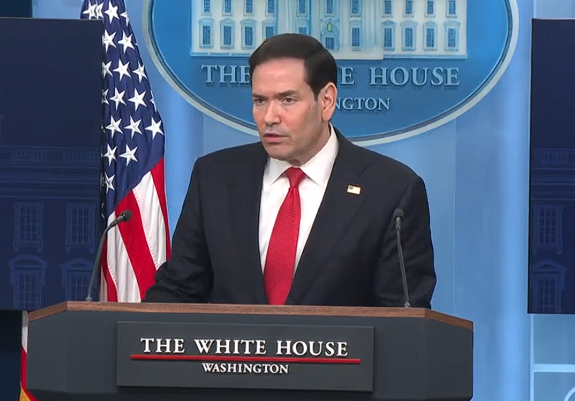
In Washington, on Tuesday at 2 pm local time – several hours after the podcast had concluded but before Araghchi had landed in Beijing – US Secretary of State and National Security Adviser Marco Rubio was asked [19]by a reporter: “What’s your reaction to Iranian foreign minister visit to China? Also, Beijing instructed its firms to ignore US sanctions. Uh, could you also address that?”
 [20]
[20]“I’ll direct you to Treasury on that front,” Rubio said on the sanctions question. “There are options that we have. If you ignore our sanctions, you’re going to face secondary sanctions and I don’t have an announcement for you on that today, but we don’t do these things, you know, for symbolic purposes. On the first point about the visit, it’s fine. I hope the Chinese tell him what he needs to be told and that is, that what you were doing in the straits is causing you to be globally isolated, you’re the bad guy in this. You — you guys should not be blowing up ships, you should not be putting mines, you should not be holding hostage the global — trying to hold hostage the global economy. I hope the Chinese bring, whether it’s done privately, but I hope it’s done directly, that that’s the message they deliver to them. As I outlined earlier today, China is an export-driven economy. OK? I’m not here to speak on behalf of what’s in the best interest of China, but it’s obvious. China is an export-driven economy. That means they depend on other countries to buy from them. Well, you can’t buy from them if you can’t ship it there, and you can’t buy from them if your economy is being destroyed by what Iran is doing. So it isn’t Iran — it is in China’s interest that Iran stop closing the straits. It’s harming China as well [19].”
Rubio was also asked [19] about the priority of the Taiwan issue for the Chinese in the planned Trump-Xi talks. “I’m sure Taiwan will be a topic of conversation; it always is. As you know, we understand — the Chinese understand our position on that topic, we understand theirs. And I think both parties, again, without getting ahead of myself of what will happen in the talks, but I think both countries understand that it is neither one of our interests to see anything destabilize happen in that part of the world. We don’t need any destabilizing events to occur with regards to Taiwan or anywhere in the Indo-Pacific. And I think that’s to the mutual benefit of both the United States and the Chinese.”
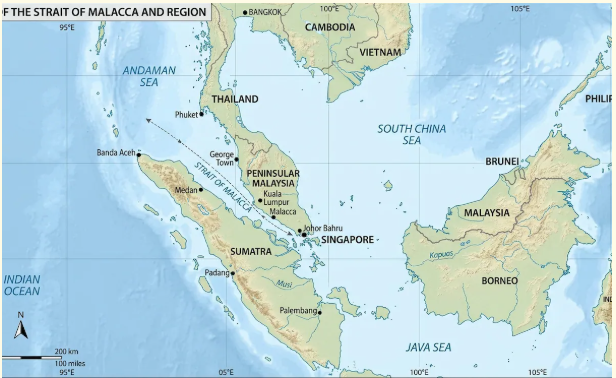
MAP OF THE MALACCA STRAIT BETWEEN THE PACIFIC AND INDIAN OCEANS, BETWEEN MALAYSIA AND INDONESIA
 [21]
[21]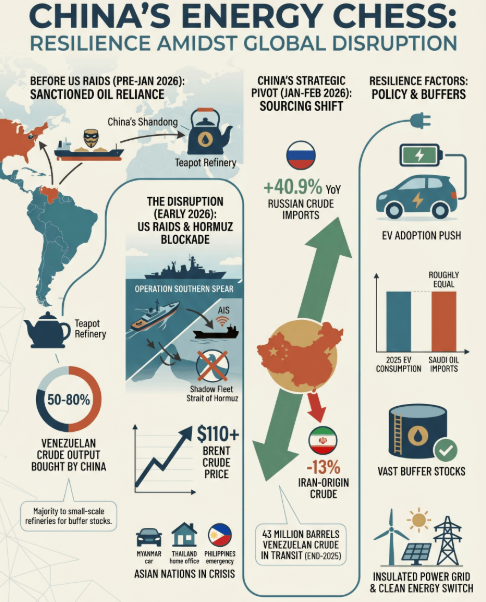 [22]
[22]Source: https://www.ndtv.com/world-news/caracas-to-hormuz-to-malacca-how-trump-is-trying-to-strangle-chinas-oil-11360453 [23]