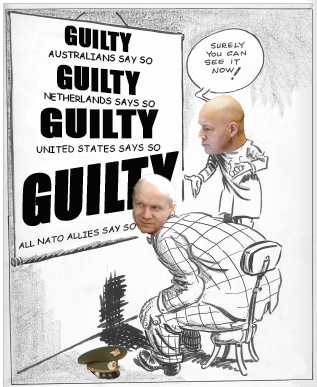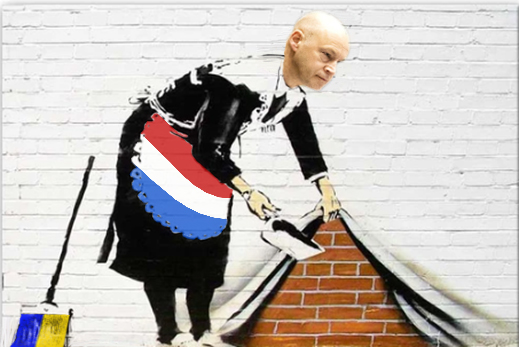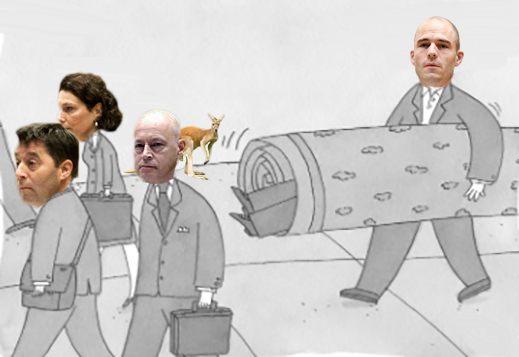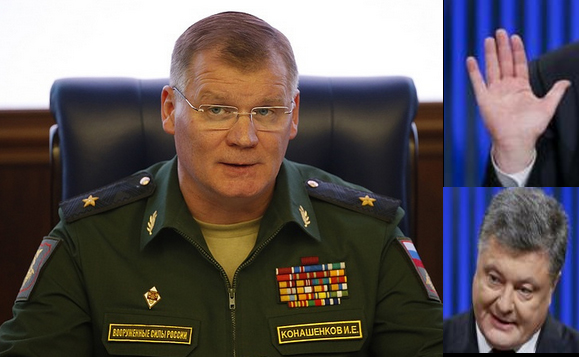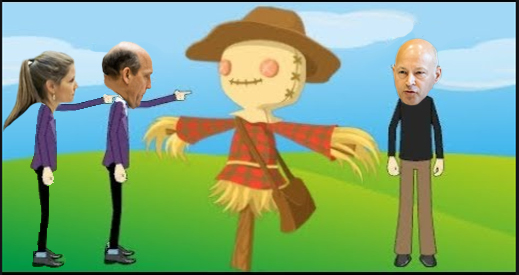
A London barrister named Michael Mansfield (lead image, left) and solicitor Irene Nembhard (top right) have moved one step closer to claiming a multi-million pound payment from the British Government on their allegation that the British intelligence and security services had been negligent in protecting Dawn Sturgess from a Russian state assassination attack in 2018. The allegation was dismissed in a coroner’s court ruling last December. But this will now be reviewed by a High Court judge in a hearing planned to start in July.
The calculation of the lawyers is that the evidence of the Novichok nerve agent, of the Russian assassination plot against Sergei and Yulia Skripal (top left and centre), and of the cause of death of Sturgess is so secret, and also so false, the British Government will prefer to pay the lawyers their bounty, rather than let a High Court judge hear the evidence in open court and expose the truth.
There has been no court test to date of the British government’s narrative of what happened to the Skripals in Salisbury town centre on March 4, 2018; and then to Sturgess at a flat in nearby Amesbury on June 30, 2018; Sturgess died in Salisbury Hospital on July 8, allegedly of the same Novichok poisoning from which the Skripals have recovered. The inquest into the cause of her death has been repeatedly postponed and is unlikely to be held.
The Skripals are being held incommunicado: Yulia Skripal has not been heard from since July 24, 2018; Sergei Skripal not since June 26, 2019. London lawyers now say the Skripals may be called as witnesses to testify in the High Court.
One day after Australia was defeated at the World Health Assembly in a joint effort with the Trump Administration to attack China, and after Beijing retaliated, calling the Australian Government a US puppet, a joke, and chewing-gum on China’s shoe, Australia has telephoned Moscow for help. In a call initiated by Foreign Minister Marise Payne (lead image, left), Foreign Minister Sergei Lavrov was asked to boost Russian imports from Australia and send more Russian tourists to the country.
Lavrov replied that Australia should stop fabricating evidence of Russian involvement in the shoot-down of Malaysia Airlines flight MH17, and withdraw from the Dutch show trial which is scheduled to resume hearings in Amsterdam next month.
Payne has not disclosed the telephone call to Moscow in her twitter stream nor is it revealed in her ministry’s news releases. No Australian newspaper or television broadcaster — half of them owned by Rupert Murdoch and equally hostile to both Russia and China — has reported the Payne-Lavrov conversation.
Payne’s spokesman, David Wroe, refused a request to confirm the conversation, which took place in the early Moscow afternoon of Wednesday. Payne’s ministry in Canberra is also refusing to explain why the minister made the first-ever telephone call to Lavrov on record in the Russian Foreign Ministry’s archive.
“A clumsy move by the Australians,” commented a Moscow source close to the General Staff, “to make it appear they can balance ‘positive’ relations with Russia against the bad relationship they caused with China. In Mao’s day, the Australians were called paper tigers and running dogs. Recently we’ve experienced how much of a US puppet the Australians are; they imposed trade sanctions against us in 2014; they have lied consistently about the MH17 affair and tried against us the same ‘international investigation’ ploy they failed to achieve against the WHO. This telephone call changes nothing except to convince us, and the Chinese of course, that Australian officials are blundering so badly in the world Trump won’t be able to save them.”
A coordinated attempt by the Australian and US governments to blame China for the corona virus, and to attack the World Health Organisation (WHO) for covering this up at China’s behest, failed when the World Health Assembly (WHA) voted on Tuesday afternoon.
The terms of the Covid-19 resolution adopted by the 194 member-state assembly declared it is up to the WHO to “initiate, at the earliest appropriate moment, and in consultation with Member States, a stepwise process of impartial, independent and comprehensive evaluation, including using existing mechanisms”.
This language, originally sponsored by the European Union (EU) and Russia, repudiated the Australian demand, issued after talks with President Donald Trump (lead image, centre) on April 22, that an investigation should be conducted independently of the WHO because “the government does not hold faith in the WHO, or its decision-making body the World Health Assembly, to lead a probe into the pandemic”.
The WHO could not be trusted to investigate itself or the origin of the Covid-19 virus, said Foreign Minister Marise Payne (lead image, centre). She does “not believe the WHO should run the inquiry,” the official told a state media organ. “It will need parties, countries to come to the table with a willingness to be transparent and to engage in that process and to ensure that we have a review mechanism in which the international community can have faith.” The WHO, she added, “strikes me as somewhat poacher and gamekeeper”.
The terms of the resolution adopted on Tuesday also ignored the claim by Australia’s agriculture minister that the Huanan wild animal market in Wuhan was the starting point for the virus to develop in human beings. “We should be damn proud as a nation,” said David Littleproud, “that we led the world, not only on understanding what the WHO has done, but understanding what wildlife wet markets’ role is in these pandemics.”
Apart from claims broadcast by Australian and US officials to the media, there is no trace of an Australian text circulating among the WHO member states since Canberra and Washington started their campaign in April. WHO spokesman Margaret Harris, speaking in Geneva just after Tuesday’s vote, said no Australian draft resolution had been submitted to the WHO secretariat. Harris also said the US had refused to join the final resolution as a sponsor, but did not publicly object when the vote was called.
David Wroe, spokesman for Australian Foreign Minister Marise Payne, was asked to substantiate the minister’s claims by releasing the “first Australian proposal for the text of the resolution; the date of first introduction of the Australian text; and the texts with dates of such subsequent Australian text drafts submitted to the WHA.” He refused.
Russian Foreign Minister Sergei Lavrov attacked the Australian-American campaign last week. “This is not a time to be crying ‘stop thief!’ and pointing fingers, it’s a time to cooperate and to develop a vaccine as soon as possible. Institutions in Europe, China, Russia, the US and many other countries are working on this… it is at least inappropriate to say that the Chinese were concealing information from the WHO, or that the WHO did not know some things, or that it knew about the coronavirus but held back information. Needless to say, nobody could imagine the developments that led to this pandemic but it’s an unprecedented situation. Doctors were acting under conditions where the experience gained from other pandemics was not enough. This pandemic proved to be much more serious. I think WHO experts must be supported and encouraged in every way rather than accused without grounds. This is especially true since the overwhelming majority of WHO Secretariat employees come from the countries that are the strongest critics of the WHO.”
On Tuesday, following the WHA vote, the Chinese government issued a statement from its embassy in Canberra. It said the terms of the Covid-19 resolution were “totally different from Australia’s proposal of an independent international review…All those who know the consultation process that led to the resolution understand this. To claim the WHA’s resolution a vindication of Australia’s call is nothing but a joke.”
All the well-known plague novels make the same mistake. So unexpected, inexplicable, incurable, and comprehensively lethal was the plague for those telling its story, their conclusion has been that there can be no getting back to normal.
Not so in Russia. “Over the past week”, President Vladimir Putin declared last Thursday, “we have dedicated our efforts primarily to countering the coronavirus epidemic and preparing urgent measures to support the people and the economy… now that life is getting back to normal, it is essential that we deliver in a proactive and effective manner on the strategic objectives and large-scale projects with a long planning horizon and generate momentum.”
He’s right; the plague diarists are wrong – pandemics reinforce the normal and those who survive are doubly sure of it. But normal for Russia is the one the Anglo-American warfighters also aim to go back to. Their campaign to turn the World Health Organisation (WHO) upside down to blame China for the coronavirus is a fresh example – and contrary to western media reports, Russia is not supporting it.
The new WHO campaign, in the Russian interpretation announced last Friday by Foreign Minister Sergei Lavrov, is nothing more than a repeat of the British campaign two years ago to blame Russian assassins for smearing Novichok poison on the door-handle of Sergei Skripal – and to turn the Organisation for the Prohibition of Chemical Weapons (OPCW) upside down until it endorsed the fiction.
Cardiology doesn’t expire when people die of heart attacks. Just so, no one should expect that when a man dies of the corona virus, or hundreds or thousands of men, the sociology of their pre-existing health, race, ethnicity, income, education, ideology – in short, their class in the old- fashioned meaning of the word — goes belly up at the same time. For understanding and prediction, sociology will always trump epidemiology — the basic reproductive ratio R0 of Covid-19 might run from 3 to 9, but the R0 ofclass struggle is many times more virulent.
It is therefore surprising that so many pundits, even the Russia-hate specialist Anne Applebaum, think to publish an interpretation of the sociology of the plague of ancient Athens, circa 430 BC; and taking Thucydides as their source, give lectures on how much the European and American societies can learn from him on Covid-19, but have failed to learn to date. At the same time as they depend on Thucydides for their lessons, they ignore the very first of his – that was his dismissal of the source and cause of the plague among the foreign enemies of the ancient Athenians. In other words, Thucydides wouldn’t be blaming China and Russia for Covid-19 now any more than he blamed the Spartans then.
Death can be a coincidence, but not in the Russian aluminium business.
So when Dmitry Bosov died of a pistol shot at his home near Moscow on the evening between May 5 and May 6, and Anatoly Bykov was arrested by federal agents in Krasnoyarsk on May 7, everyone with well informed suspicion asked if there is a connection to a Kremlin political calculation made at the highest level.
Roula Khalaf (lead image, right) is the only editor of a major London newspaper about whom next to nothing important is obvious, not even her name.
She was appointed last year by Tsuneo Kita (left), chairman of Nikkei, the Japanese media group and owner of the paper, to succeed Lionel Barber as editor. On January 20 of this year, Kita assigned Khalaf a seat on the board of Financial Times Limited, the entity through which the Japanese run their marginally profitable London property. The UK company registration reveals that Khalaf is a maiden name, and that her legal name is Roula Khalaf Razzouk.
The disguise is for policy reasons, according to two people close to the matter. Khalaf Razzouk began her career in the Financial Times (FT) in 1995. She has advanced over the past 25 years, FT sources claim, by taking orders from her superiors and never reporting outside the guidelines of the FT’s management. Conformity to the interests of the beneficial owner has been the rule of her journalism; anonymity her method for concealing from readers what the beneficial owner’s interests are. This combination of conformity and anonymity has provided Khalaf Razzouk with one target to be attacked on every front and at every opportunity. That’s the combination of Syria and Russia.
This is Khalaf Razzouk’s policy; and she conceals it for personal reasons also. They spring from her husband’s business interests and his and her background in the well-known el-Solh family of Beirut. From the el-Solhs have come four Lebanese prime ministers on the Sunni moslem side of the Beirut line; a financial and political alliance against the Saudi succession of Crown Prince Mohammed bin Salman; together with considerable wealth which the family has accumulated over almost a century. The husband’s name is Assaad Wajdi Razzouk. Khalaf manages to keep his personal details as secret as her husband and their families in Beirut keep her secret.
What to make of the truthfulness of the newspaper Khalaf Razzouk is now directing when it demands transparency and accountability from its targets, but not from its director?
It’s embarrassing to be caught publicly with a case of the crabs, especially if you are a media celebrity. That is, unless you are in the business of selling your celebrity status to advertise other people’s crabs, not your own.
This is the case of Ksenia Sobchak, a socialite from St. Petersburg, and her mother, Lyudmila Narusova, a senator in the upper house of the Russian parliament. For years they have been trading on the fame of Anatoly Sobchak, Ksenia’s father, Lyudmila’s husband. He was the first elected mayor of St. Petersburg; first promoter of the post-KGB career of Vladimir Putin; and himself such a threat to the presidency of Boris Yeltsin twenty-five years ago he had to flee to Paris for a while and then on his return die prematurely. Sobchak suffered from many infections from the lice of his city at the time. Crabs weren’t one of them.
After the episode of the sermon by the Jesuit priest, blaming the plague on the sinfulness of his congregation – “a calamity has befallen you, my brethren; you have deserved it…no earthly power – not even, note this well , vain human science – can shield you from His hand as it reaches out to you”; and after the journalist’s attempt at bribing the militia to arrange his escape from the plague city; and after the municipal administrator’s acknowledgement that “luckily, I have my work”; the visitor from Paris explained to himself in his diary that regarding the old Chinese custom of “playing the tambourine in front of the genie of the plague…it was quite impossible in reality to know whether the tambourine was more effective than other preventive health measures.”
So it seemed to the leading citizens of a town consumed by a pandemic imagined by the French writer Albert Camus seventy-five years ago.
Camus began writing La Peste (“The Plague”) in Oran, Algeria, then a colony of France, at the beginning of 1941, but he didn’t finish it until 1946. Published a year later, it is Camus’s most widely read novel and is often interpreted as an allegory of the German occupation of France which began in May of 1940, and lasted until August 1944. It isn’t that at all; Camus himself didn’t say so.
Medically, the plague of Oran in the book is the bubonic pandemic known in English as the Black Death. Historically that has never been recorded in Oran; cholera was the plague there. An equally lethal form but with different symptoms and contagion is known as pneumonic plague; Camus described many cases of that in his fictional Oran. Because he himself had contracted tuberculosis at the age of 17 and been sent to the central French alps for sanatorium treatment, Camus understood very well the lung failure we now recognize in the serious stages of Covid-19. The plague of Oran in the novel is reported as starting in mid-April of a year in the 1940s, and ending nine months later in mid-January. In between, the administration ordered a total lockdown, cutting the town off from the outside. Inside the town, district and building quarantines were imposed; along with tracing of contact networks, conversion of public buildings and stadiums to hospitals; nightly curfews; wearing of masks; daily publication of infection case bulletins; and the rushed development of a vaccine.
Reading La Peste in the time of the corona virus we can understand the book, not as an allegory, but as a realistic portrait of what happens to a town and a representative sample of its people during a lethal pandemic.
Realism was also Camus’s declared objective. He makes Joseph Grand, a townhall apparatchik whose job was compiling numbers of infections and deaths in a daily report of rates and graphs, into a would-be novelist in his spare time. But in the hundreds of pages Grand wrote, he never managed to get beyond the first sentence. After narrowly surviving a bout of the plague himself, when he burned his manuscript, he started on the first sentence again. “I’ve cut out all the adjectives”, Camus reported him saying.
The master of French realism without adjectives at the time Camus was composing his story was Georges Simenon with his tales of Jules Maigret, a detective chief inspector in Paris. Camus acknowledged reading and learning from Simenon; they also shared editors at the Gallimard publishing house. But they spent different wars — Camus in the underground resistance press, ill-fed and in hiding; Simenon above ground, comfortably settled and well off. There is almost no German war or occupation in either man’s books.
“Understand and judge not” was Simenon’s motto, expressed in the mouth of Maigret. He didn’t really mean it. “How hard it must be”, Camus’s motto was expressed by Bernard Rieux, the doctor and central character in La Peste, “to live only with what one knows and what one remembers, and deprived of what one hopes.” Camus did mean it. Deprived of hope is what a pandemic like Covid-19 does to you. Understanding that in Moscow today is what reading Camus’s book is for.