By John Helmer, Moscow
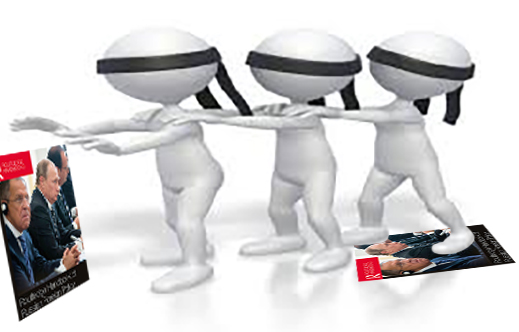
The Routledge Handbook of Russian Foreign Policy is a 450-page compendium by academics who earn modest livings in think-tanks at places in North America or Europe like Louisville, Hamburg, San Francisco, Rhode Island, Edinburgh, West Virginia, South Carolina, Southern California, Newcastle, Uppsala, Tartu, and Helsinki. In the book Russian academics in Russia are outnumbered by the westerners by 26 to 8; all are on small state-paid livings led by Andrei Sushenkov, programme director at the Valdai Discussion Club. That 14-year old think-tank is financed by the Kremlin information chief Alexander Gromov and the president’s spokesman Dmitry Peskov.
The handbook proprietor, once a well-known 19th century London publisher, is now the US conglomerate Informa. It operates on the principle of Gresham’s Law – the more information you produce for sale, the less likelihood you will be outsold by the truth. The Valdai Discussion Club and other think-tank creations in Moscow have been described by President Vladimir Putin as a “propaganda machine” to compete with their Anglo-American counterparts. To a Kremlin sponsored journalist, their output is “political marijuana smoke.”
The handbook writers must be approaching retirement because they dedicate their work “to the younger generation of scholars of Russian foreign policy”. The book begins: “The importance of studying Russian foreign policy (RFP) today is as great as ever.” By page 450 this is neither more obvious, nor less. (more…)