

By John Helmer, Moscow
@bears_with
The survivors of the US attack and sinking of the Iranian frigate IRIS Dena on March 4 are direct witnesses of exactly what happened — not only in the hours and minutes before the attack, but also in the days preceding –at least a week — when Iranian officials were requesting sanctuary from the Sri Lankan and Indian governments; and also in the days following the attack – now almost a month ago — when Sri Lankan and Indian officials have prevented the witnesses from speaking in public.
The story of the plan of US attack and the evidence of the culpability of Sri Lankan and Indian officials was told here, and the Twitter stream which has followed.
This was not a report on whether the UN Charter, the international law on surprise attack, the rules of war and the Geneva Convention code of naval conduct were violated by the USS Charlotte in the submarine-launched torpedo firing without advance warning to its target; nor whether the Dena was armed or unarmed.
A US military assessment has concluded: “The sinking of the IRIS Dena was legal under the law of naval warfare, the submarine was neither required nor equipped to rescue the sailors it left in the water, and Congress had every opportunity to stop the war but voted against it. What remains harder to explain is why the U.S. left its premier submarine-hunting aircraft to fly drills alongside the Dena one week before a submarine killed her.”
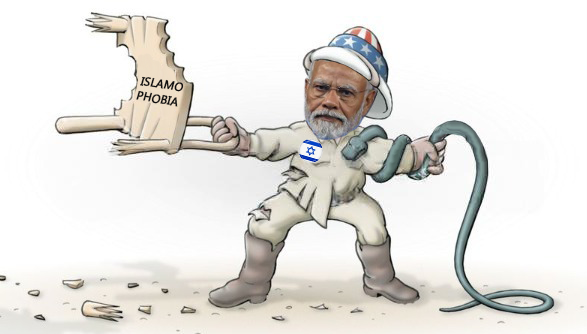
Instead, the Dances with Bears report of March 24, and earlier ones, were presented to show Indian Prime Minister Narendra Modi and Minister of External Relations, Subramanyan Jaishankar, had declared themselves on the side of the US and Israel against Iran before the latter launched their war on February 28. In their conduct of the negotiations with Iran over the Dena and its two escorts, before the attack and since then, the Indians have demonstrated they were not neutral.
Their attempts to retrieve this neutrality have followed after — but only because — the short war and defeat of Iran which they expected have failed; and after Iran’s fight-back put Indian workers, businessmen and offshore financial operations in the Gulf states at risk, and stopped essential supplies of oil, gas and fertilizer on which the Indian economy depends. No Indian mainstream or alternative medium has been found which has reported this evidence and discussed the implications of Modi’s abandonment of India’s neutrality.
There has been more public debate of Sri Lanka’s neutrality and criticism of the conduct of President Anura Dissanyake. In EurAsia Times, an Indian analyst Sumit Ahlawat reported on March 26 under the headline “Iranian Sailors Trapped in Sri Lanka: Tehran Demands Return, US Pressure Mounts — Can Colombo Stay Neutral?” He reports from an interview with Sri Lanka’s Foreign Minister Vijitha Herath that currently, 252 Iranian sailors remain in Colombo’s “custody” – 15 on board the escort IRIS Bushehr, which was given safe harbour in Colombo, then Trincomalee, after the Dena’s sinking; the remaining 204 of the Bushehr crew at a Sri Lankan Navy camp, and in a separate Sri Lankan Air Force camp, the 32 survivors of the Dena.
There remain discrepancies in the official statements and press reports of how many Bushehr crew remain in Sri Lanka. Altogether, the Iranian total is either 251; 252; or 253, depending on source.
“They are not prisoners,” Foreign Minister Herath was quoted as saying. “But that doesn’t mean, give them all freedom.” The Iranians are being held incommunicado, allowed to telephone their families in Iran under strict supervision, but prevented from speaking to the Iranian media or the local press. In isolation from their fellow Iranian crew members, the special conditions of the Dena crew in Sri Lanka have not been reported.
Herath has admitted there is intense US government pressure not to allow the repatriation of the Iranian crews. The pressure includes the threat to reverse the trade tariff and other concessions which the Trump Administration gave Colombo last year after first penalizing the country’s exports with a prohibitive 44% tariff.
There has been sharp criticism from the Sri Lankan Navy of President Dissanayake’s calculated delay in allowing the Dena, the Bushehr, and the third vessel in the squadron, IRIS Lavan, to make safe harbour, despite their request before the Dena attack. “ ‘We did not take any prompt action,’ said former Sri Lankan Navy chief, Rear Admiral (ret) Sarath Weerasekara, in an interview with a London newspaper on March 16. “‘We could have saved those lives also. This has been discussed in the [Sri Lankan] Security Council and yet no action has been taken.’ In the aftermath of the attack, Sri Lanka agreed to allow Bushehr to dock late on 4 March, amid fears it too would be hit.”
There has been no investigation in India of the comparable delay by Modi’s National Security Council. Retired Indian admiral-rank officers have been critical in public of the US for attacking the Dena and for not assisting in the rescue of survivors; they are either unaware of the Modi decisions which exposed the Dena, or unwilling to express the dismay and criticism of Modi which are circulating in the Navy Headquarters staff in Delhi and at Eastern Command of the Indian Navy, which had hosted the Dena squadron at Visakhapatnam between February 15 and 25, before it set sail on its final voyage.
Because Russia is allied with Iran, providing both humanitarian and military assistance since the US and Israeli attack began, there have been official statements almost daily from Moscow on the targeting of Iranian civilians and the nuclear reactor complex at Bushehr, where Russian technicians continue to work, following their partial evacuation. Although the Russian Navy frigate Marshal Shaposhnikov participated with the Dena in the naval exercises at Visakhapatnam in mid-February, there has been no official Russian comment on the sinking of the Dena.
The most detailed Iranian comments have come in a 40-minute press conference in Colombo by Iran’s Ambassador to Sri Lanka, Alireza Delkhosh. He reveals that the first request for sanctuary for the Dena, Lavan and Bushehr was initiated by Iran before the vessels left Visakhapatnam on February 25. That is before the February 26 date which President Dissanayake has claimed in his press and parliamentary statements.
It also raises the question — did the Iranians also ask the Indian Government for safe harbour at the same time.
The Delkhosh disclosure means that the Iranian squadron set sail from the Indian port on February 25 without orders to return to the home port of Bandar Abbas. The Indian Port Clearance Certificate required to have been filed before February 25 must therefore show the planned voyage destination. This document remains secret. The subsequent course the Iranians took southward through the Bay of Bengal may have been extended eastward and slowed down because of the delays in Sri Lankan and Indian permissions.
That delay is the political crux of this story. Its outcome was the killing of the Dena and of the neutrality of the Indian and Sri Lankan politicians involved.
Follow the press conference of Ambassador Delkhosh here.
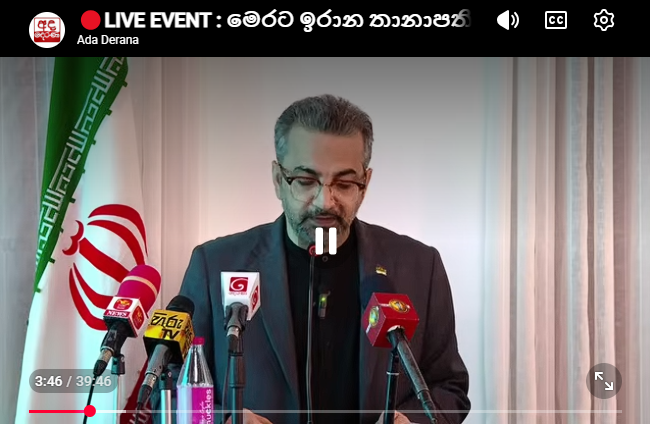
Source: https://adaderana.lk/news.php?nid=120112
“Our message to our neighbouring countries,” Delkhosh said, emphasizing the importance of neutrality. “Please don’t be complicit in the crimes of the United States and Israel regime.”
In response to questions from reporters, he discussed the attack on the Dena and the prior requests for safe harbour, commencing at Minute 13. “During the presence in India, this vessel [Dena] and two other vessels [Lavan and Bushehr] were invited– I repeat it – invited by the Sri Lankan side to come here [Colombo]. They came here on their invitation. And when they were here, they didn’t receive any alert from the United States… During the navy exercise in India, your navy commander invited from the Iranian navy commander in order to have a friendly visit…three of them. One [Lavan] went to the Indian coast, and two of them came here. Dena was attacked and Bushehr is here. ”
The Sri Lankan officer to whom Delkhosh referred was Vice Admiral Kanchana Banagoda. He also met with the Indian Navy chief, Admiral Dinesh Tripathi on February 19. They confirmed the Sri Lankan invitation for the Indian Navy’s training ship, INS Tarangini to visit Trincomalee on February 27. The date of the Iranian portcall was reportedly fixed for later, early in March.
Banagoda returned to Colombo in February 20, when he met with Admiral Stephen Koehler, commander of the US Pacific Fleet. Without knowing of Banagoda’s discussion of the planned Iranian visit to Sri Lanka, a local newspaper, Tamil Guardian, headlined a report on March 4: “Did Washington’s Sri Lanka visit precede a secret naval strike? Questions grow after Iranian frigate sunk? Questions are being raised over whether a recent visit by the commander of the United States Pacific Fleet to Sri Lanka is linked to the sinking of an Iranian warship in waters near the island.”
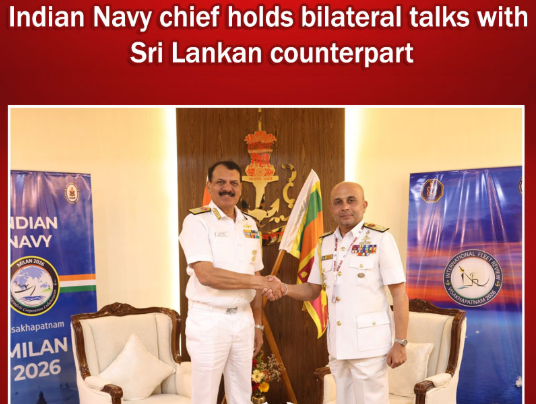
Admiral Tripathi (left) and Vice Admiral Banagoda meet at Visakhapatnam at the international naval review and exercise, MILAN 2026. Source: https://www.instagram.com/p/DU8TFiuDY7l/ The Tehran Times has confirmed that the head of the Iranian delegation at MILAN 2026 Iranian Navy Commander Rear Admiral Shahram Irani, had met with Banagoda.
From the media searches by Twitter followers, additional details of the single repatriation flight from Hambantota, Sri Lanka, to Kochi, India, and thence to Yerevan in Armenia, have been confirmed. This flight took place on March 13.
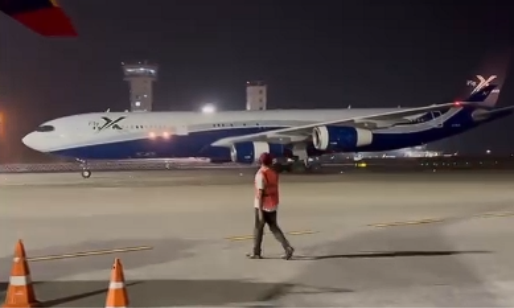
Source: https://www.facebook.com/cochinaviationchannel/videos/just-in-a-flyx-aero-a340-aircraft-has-just-landed-in-kochi-from-hambantota-in-sr/955393080253931/ This Airbus A340-330 appears to have seat capacity for about 100.
According to a plane spotter source at Kochi, “A FlyX Aero A340 aircraft has just landed in Kochi from Hambantota [sic]] in Sri Lanka. This Zimbabwe registered aircraft (Z-FLA) came in from Antalya to Sri Lanka earlier today. Reason unknown. This is the flight that came to pick up the personnel from the Iranian Navy ship that arrived in Kochi.”
It has been reported in the Indian press that this aircraft carried the remains of the 82 bodies recovered from the Dena from Colombo. Part of the Lavan crew then boarded the aircraft, which flew on to Yerevan. From there a convoy of buses and trucks carried the crew and coffins to Iran and a public funeral and memorial was held the next day.
The Times of India report of March 14 counted “nearly 100” Lavan crew members were taken out on this flight.
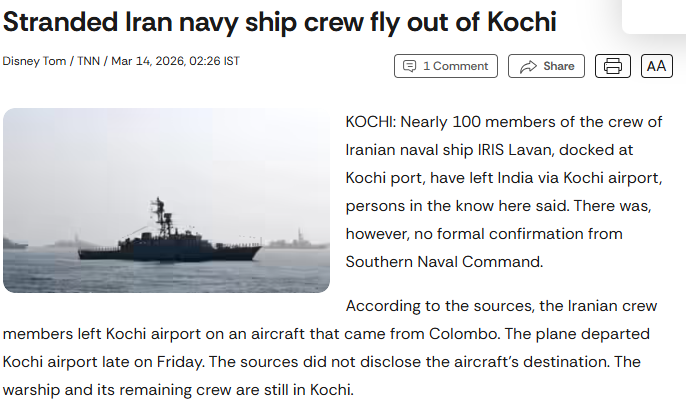
No government source was identified for this press report; “there was, however, no formal confirmation from Southern Naval Command.” The newspaper also did not report how many of the Lavan crew remained in India. The approximate number, based on an estimated complement of 183 at the Visakhapatnam exercise, was more than 83. One Indian report claimed all 183 Lavan crew were “set to be repatriated” on March 14; this proved to be mistaken. A second Indian report, claiming to be from “people familiar with the matter”, said the “non-essential crew members” had been flown out, and that “over 50 of the 183 crew members have stayed back in India as the ship, IRIS Lavan, continues to remain in Kochi, they said.”
Citing sources described as “people familiar with the matter [speaking] on condition of anonymity”, the Hindustan Times reported that “the Iranian side is repatriating the non-essential members of the 183-strong crew of IRIS Lavan, while a limited number of crew members will stay back to maintain the warship, the people said.” No count was reported of those remaining nor an explanation for the sizeable number. This newspaper also reported that 84 bodies had been recovered from the Dena but only 45 were repatriated on this charter flight; this may have been a miscount.
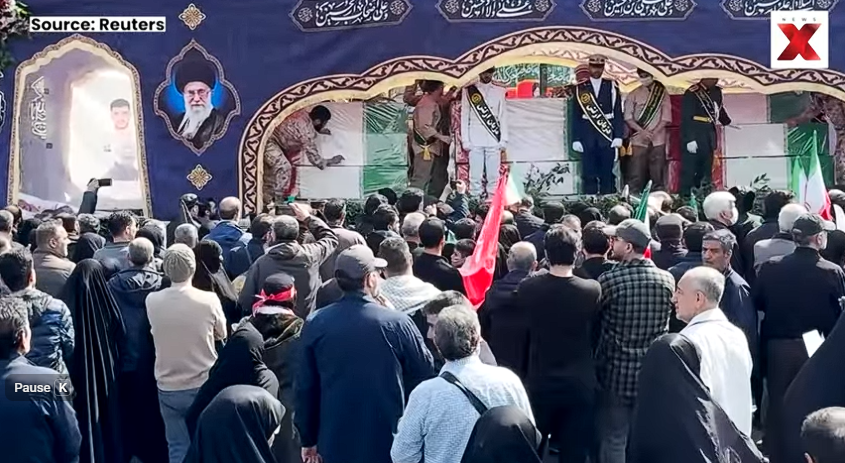
Source: https://www.youtube.com/watch?v=kcaSyDcupFg and https://www.facebook.com/en.irna.ir/posts/-funeral-in-bandar-abbas-for-dena-destroyer-martyrs-a-funeral-ceremony-was-held-/940106792111287/
Altogether, at least 334 Iranian sailors appear to be interned in Sri Lanka and India at present. There is a press blackout on the negotiations between the Indians, the Sri Lankans, Iranians and American officials on what will happen to them. Delkhosh has said: “we are working to take them to our country as soon as possible.” Reuters has reported from US sources, including a State Department cable, that the US and Israel are opposing repatriation of the Iranians.
Details of these negotiations in Colombo and Delhi have not been reported. However, the 334 Iranians appear to be hostages to the threats of sanctions from the US on the one hand, and to the Iranian offer of oil and gas through the Strait of Hormuz, on the other. “Sri Lanka is a friend[ly] country,” Delkhosh told the press in Colombo, “and the Hormuz Strait is not closed to the friend[ly] countries’ vessels. Because of that Iran always is ready to provide the necessities of friendly countries like Sri Lanka. And in any case, if Sri Lanka demands oil or any other necessary goods, Iran will supply these goods to Sri Laznka. We don’t want to see Sri Lanka in trouble.”
There has been no comparable statement to the press from Iranian officials in Delhi or in Teheran, where the Modi-Jaishankar alliance with Israel has been recognized. There have been at least four telephone calls from Jaishankar to Iran’s Foreign Minister, Abbas Araghchi, and one telephone call between Modi and Iran’s President Masoud Pezeshkian. However, Iran has released only token Indian oil and gas cargoes from the Persian Gulf.
The two Indian officials do not refer to the war against Iran but to the “conflict in West Asia”. Modi told President Trump on March 24 that “ensuring that the Strait of Hormuz remains open, secure and accessible is essential for the whole world”. In meetings this past week with Secretary of State Marco Rubio, Under Secretary of Defense Elbridge Colby, and Arab foreign ministers Jaishankar continued to emphasize Indian positions against Iran.
Jaishankar and Modi have also been applying pressure on Sri Lanka to stay in line. According to a Modi tweet, “[on March 24] Spoke with President Anura Kumara Dissanayake and discussed the evolving situation in West Asia, with particular focus on disruptions affecting global energy security. We reviewed progress on key initiatives aimed at strengthening India-Sri Lanka energy cooperation and enhancing regional security. As close and trusted partners, we reaffirmed our commitment to work closely together in addressing shared challenges.”
For that last line, read India’s advice to Sri Lanka to do what it is told.
Sri Lankan officials have appealed to Russia and China for their help. The Kremlin responded by sending a senior Energy Ministry official to Colombo on March 27. “Russian Deputy Energy Minister Roman Marshavin discussed prospects for bilateral cooperation in the fuel and energy sector with the leadership of Sri Lanka, including President Anura Kumara Dissanayake. The parties discussed the possibility of increasing supplies of energy resources to the island nation and Russian companies’ possible involvement in investment projects in Sri Lanka, Russia’s Energy Ministry reported. Particular attention was focused on the issues of cooperation on training workers for the fuel and energy sector and technological sovereignty.” The Russian side confirmed its willingness to assist in training Sri Lankan professionals in the energy sector at major Russian energy companies, and expressed a willingness to share know-how in the area of digitalization and cybersecurity in the fuel and energy sector.”
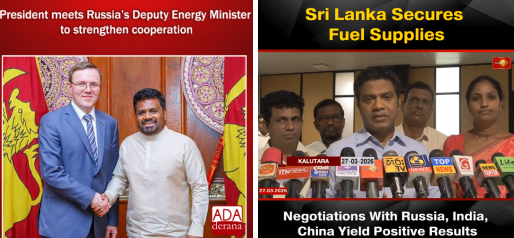
Sources, left, https://www.instagram.com/p/DWWkDyEE-Jh/ and right, https://www.instagram.com/reel/DWZOnrXDunu/










Leave a Reply