
An attempt is underway to arrange a meeting between President Vladimir Putin and the Saudi Crown Prince Mohammed bin Salman (MbS) to restore the agreement on oil production cuts which MbS broke at the March 6 meeting of the Organisation of Petroleum Exporting Countries with Russia (OPEC+). The Crown Prince is reportedly now ready to agree on a formula for oil production limits along the lines already discussed with the Russians.
His pre-condition is a domestic Saudi one. He is insisting that he will meet President Putin as the Saudi head of state, no longer as Crown Prince. This means that the full and formal transfer of power from his father King Salman bin Abdullaziz will take place “imminently”.
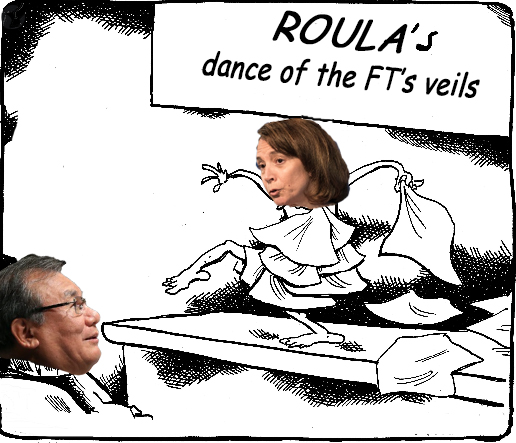
Russian toilet paper is a national secret – not a state secret, but a commercial one.
This is because
production, sales and profits have been growing fast – and this has been for
the past five years, before the current toilet paper panic.
Secrecy is also in
operation because the major foreign companies would like to keep the lion’s
share of the Russian market boom by out-selling
or buying up the competing Russian toilet paper companies. They, in their turn,
want to push the foreigners out by consolidating among themselves and lobbying
for government measures to do that. Consolidation of assets and market share is
what western market analysts call it. In Russia it can be called asset raiding.
This is when one toilet paper company takes over a rival at a price for the
assets which is below the real asset value.
In the bum boom, on the
hot seat at the moment are Essity, a unit of SCA, the Swedish paper and pulp
group group, which is currently the Russian market leader with a third of the
market; Hayat Kimya, a Turkish group trying to expand from its base in
Tatarstan; and Kimberly-Clark, the Kleenex maker of the US, which is losing
market share to the Russian brands. SCA and Kimberly-Clark are stock exchange-listed
shareholding companies with public reporting and accounting obligations. The Hayat
holding is privately held. About their Russian business they are as secretive
as each other. Altogether, the Russians produce just over half the toilet paper
sold in the market; the Swedes, Turks and Americans, just under half. That proportion is about to
change.
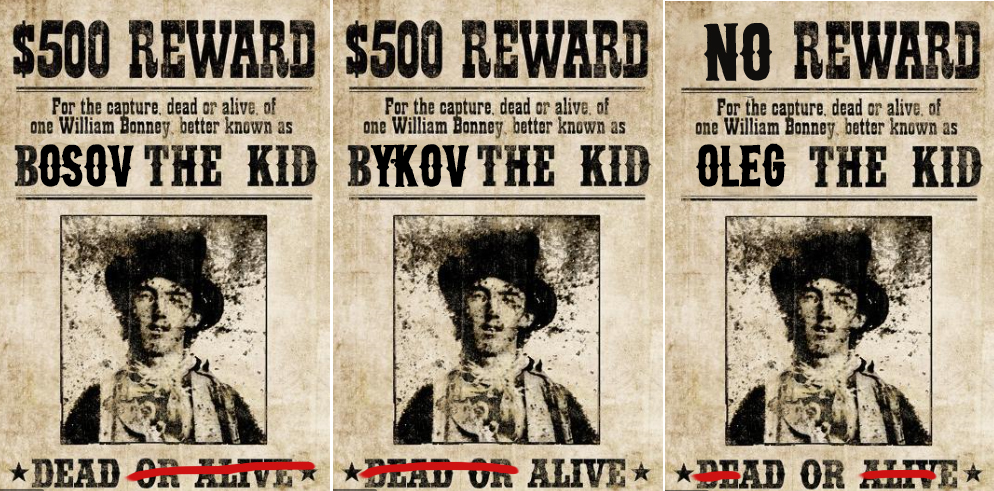
Defence lawyers for Oleg Pulatov, one of the four men charged by the Dutch government with murder in the downing of Malaysia Airlines Flight MH17, have told the court the prosecutors were acting illegally in the case they have presented so far.
A lawyer for the 298 victims killed on board the aircraft, and their next of kin, also accused the prosecution of unlawfully keeping the evidence in the case file secret. No reporters for the international or Dutch media have published this part of the trial.
The Defence Science and
Technology Laboratory (DSTL) at Porton Down, the principal chemical warfare
testing unit of the British Ministry of Defence, has acknowledged it was
producing and testing the organophosphate nerve agent Novichok from 2014.
This is four years before Sergei Skripal, the retired double agent for the UK’s Secret Intelligence Service (MI6), and his daughter Yulia, were incapacitated by a nerve agent in Salisbury on March 4, 2018. The British Government has called that nerve agent Novichok. According to the British Prime Minister, Theresa May, speaking to the House of Commons on March 12, 2018, “it is now clear that Mr Skripal and his daughter were poisoned with a military-grade nerve agent of a type developed by Russia. This is part of a group of nerve agents known as ‘Novichok’…the Government has concluded that it is highly likely that Russia was responsible for the act against Sergei and Yulia Skripal.”
The admission of British
Government testing of Novichok since 2014 came from DSTL in a letter of last
week, dated March 11, 2020. This was the laboratory’s reply to a Freedom of
Information Act (2000) request for details of testing of organophosphate
chemicals on monkeys. The reply said the
testing programme between 2014 and 2019 was a “Home Office project”. Its
purpose was “development of medical countermeasures for nerve agent exposure”.
Regarding the testing of Novichok on monkeys in this period, DSTL said “no
other organophosphate compounds have been tested.”
The admission appears to contradict the official narrative of the British Government that Novichok was produced in Russia and brought to the UK by Russian military intelligent agents on a mission to kill Sergei Skripal. The Defence Ministry, through DSTL, appears now to be admitting its own secret chemical warfare operation in breach of the international Chemical Weapons Convention. In consequence, this would have been of particular interest to Russian and many other military intelligence agencies.
In Salisbury, which is close to Porton Down and to the headquarters of the British military’s chemical warfare command centre, Skripal had been living among British intelligence officers and Wiltshire police since mid-2010; this followed his release from a Russian prison in a spy exchange. He was subjected to an unusually lengthy period of testing by British security agents to determine whether he was a triple agent still loyal to GRU, the Russian military intelligence agency he had been convicted in Moscow for betraying. If Skripal subsequently obtained information about the top-secret Novichok programme at Porton Down, he may have been judged by the British counter-intelligence service MI5 to represent a serious threat of disclosure.
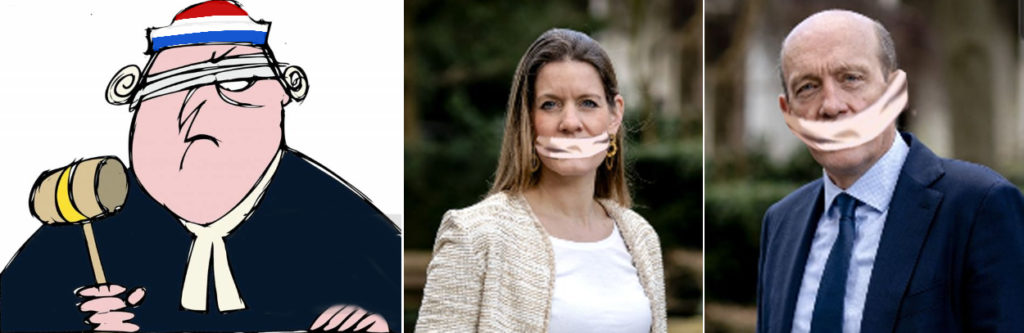
Lesions in the frontal lobe of a normal human being will cause deficits in the executive mental capacities; things like organizing data, planning action, archiving for memory, controlling anger, and the ability to make inferences about the intentions of others. Neurological trials have proved this beyond reasonable doubt.
The lead images
present the frontal lobes and the faces of the three principal prosecutors in
the Dutch trial of murder in the downing of Malaysia Airlines Flight MH17 six
years ago. Their names are, from left to right, Thijs Berger, Ward Ferdinandusse,
and Dedy Woei-A-Tsoi.
Analysis of
every word they have spoken on the second day of the MH17 trial, March 10,
reveals so many mistakes in Dutch criminal law and procedure that the medical
condition of their frontal lobes is, to independent specialists, suspect. The resulting
risk is for the defendants they are prosecuting – three Russians and a
Ukrainian; and also the Russian state, which Berger accused of “a disturbing pattern of active involvement on
the part of Russian security services, specifically the GRU and the FSB in
murders in other countries.”
The prosecutors did not speak off the cuff. They read scripts which their brains, and also those of their supervisors at the Public Prosecution Service and the Ministry of Justice, had drafted, reviewed, corrected, edited, and authorized in advance. The pathological evidence presented, therefore, is of more than three individual frontal lobes, but also of the frontal lobe of the Dutch judicial system.
Only if that is tested according to the Dutch Criminal Code and the Dutch Code of Criminal Procedure can this trial commence lawfully for the four accused of intentionally murdering 298 passengers and crew on board MH17 when it was shot down on July 17, 2014. So everything the prosecutors have said has been extracted, weighed, and dissected. Here are the neurological and jurisprudential results of the examination.
In the first two hours of the first day of the Dutch trial of allegations of murder in the shooting-down of Malaysia Airlines Flight MH17, Hendrik Steenhuis, the presiding judge, revealed that the judgement for Dutch court jurisdiction for the case to proceed is inevitable. He did that three months before he has scheduled a hearing on the question. Steenhuis also revealed that a judgement of guilt against the three Russian and one Ukrainian defendants is not less inevitable.
Judgements in a trial scheduled to run for at least twelve months, issued before lunch was served to the judges on their first day, are the makings of a show trial.
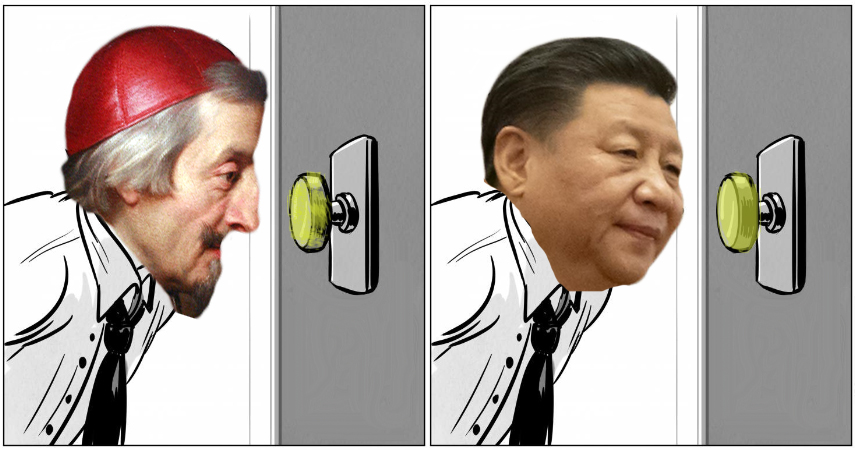
Russia is not the
initiator of the war on the oil front which is now under way. Not Russian
Energy Minister, Alexander Novak (lead image, right), but Mohammed Bin Salman
(left), the Saudi Crown Prince and chief executive of the sheikhdom.
This is war propaganda from the Financial Times : “ ‘There was a consensus among Opec [to cut production]. Russia objected and has said that from April 1 everyone can produce whatever they like. So the kingdom too is exercising its right,’ said one person familiar with Saudi oil policy.”
This is more lying from the New York Times: “Moscow refused to accept production cuts to offset the effect of the coronavirus outbreak”
What is true is that the war started with the US Government; its spetsnaz, the shale oil producers; and their offensive to capture market share from the traditional producers, the member states of the Organisation of Petroleum Exporting Countries led by Saudi Arabia, plus Russia (OPEC+). Pressing this attack when oil demand started falling, as the corona virus damaged the global economy, obliged the defenders to agree between themselves on tactics. The Russians argued for holding the current position, and let the virus, the demand dynamic, and the elapse of time damage the Americans. The Saudis argued for a break-out, a counter-offensive. Between lower-risk defence in place, and a higher-risk sally, it’s impossible to do both at the same time. Three things happened next.
They illustrate the lesson the Russian command will now teach Mohammad Bin Salman, as last week’s lesson was taught on the Syrian war front to Tayyip Recep Erdogan, Turkey’s President. Defence in depth will usually defeat offence, even surprise attack, when it runs beyond the lines of supply and reserve.
Bribes; early release
from prison; threats to kill; covert operations inside Russia, including
rendition; and intimidation of relatives.
These have been five
of the methods planned for obtaining witness testimony for the trial of the criminal
destruction of Malaysia Airlines Flight MH17 on July 17, 2014. The trial opens on Monday, March 9, in The
Netherlands. The Dutch prosecution alleges that three Russians and one
Ukrainian intended to murder the 298 passengers and crew on board the aircraft
by firing a BUK missile.
Details of the witness tampering plan have been released to reporters in The Hague by Bonanza Media this weekend. In their secret conference police officers and prosecutors from The Netherlands, Australia, Belgium and the Ukraine acknowledged they knew what they were planning was a violation of the law of the states they represented. This was acceptable to the Australian police representative so long, he said, as it was a “covert operation”. The Ukrainian prosecutor said he “sees no problem if this is done by The Netherlands. It’s like a regular intelligence operation.”
In Operation MINCEMEAT,
the brightest and the best of British secret intelligence available in London
between January and March 1943, dressed up a corpse as a high-ranking British
Army courier. He was dropped into the
water off the Spanish coast, so that he would wash up for a German Army patrol to
find, along with a briefcase of top-secret General Staff letters and plans.
They were fakes made to fool Adolph Hitler and his military commanders about
where the D-Day invasion would take place.
Deceiving the enemy turned out to be a big success. The corpse belonged to a 34-year old
Welshman, homeless and mentally ill, who had been taken to St. Pancras Hospital
in London and treated for acute organo-phosphate poisoning. He died. He had
committed suicide with rat poison.
In Operation MINCEPIE,
what’s left of British secret intelligence in March 2018 dressed up two Russians – Sergei and Yulia Skripal, 66 and 33
years old respectively (lead images) – knocked them out on a bench in the
middle of Salisbury, and took them to Salisbury District Hospital where
they were treated for acute organo-phosphate poisoning. But they didn’t die so
they have been locked up ever since. This, too, has proved to be a big success at
deceiving the enemy.
No! Whoa! Cut! Roll that sentence back! This, too, was a big success at deceiving the British people. The difference between MINCEMEAT and MINCEPIE isn’t between rat poison and the nerve agent the British call Novichok; nor between the corpse of the Welsh tramp and the live Russians who are now dead to the world. The telling difference is that the secret intelligence boys have given the game away the second time round. The biggest similarity is that Hitler and the British people didn’t notice until it was too late.
Between 11:30
Moscow time on Thursday and 14:00, President Vladimir Putin spent two and a half
hours talking with the Turkish President, Recep Tayyip Erdogan, with
interpreters present but no one else, and including lunch and toilet breaks.
The two presidents then spent three hours and twenty minutes in talks with
delegations of their officials before appearing at 17:22 for another sixteen minutes
in front of the press. The Turkish clock for the negotiations counted 5 hours
40 minutes; the Kremlin clock, six hours.
The outcome was a document entitled “Additional Protocol to the Memorandum on Stabilization of the Situation in the Idlib De-escalation Area”. This comprises an agreement of three paragraphs amounting to ten lines, and a preamble of four paragraphs repeating what professionals call boilerplate; that’s to say, points with which everyone agrees in principle, and no one in practice.
The difference between the amount of time and effort expended and the outcome isn’t between the mountain and the molehill. It is the result of the Russian side applying the brief script dictated to Putin by the Defence Minister Sergei Shoigu, the Foreign Minister Sergei Lavrov, and the General Staff led by General Valery Gersasimov, and confirmed the day before by the Security Council.
The script is dictated by the principle of the tsarina, Empress Catherine II, during the Turkish-Russian wars of 1768 to 1792. The principle is that nothing the Turks say they agree to or sign can be relied upon; and that everything the Turks can’t achieve with their army will be tested again and again, until and unless they are defeated by the battle of arms and the defence of territory by more force than the Turks can overcome. The corollary of the Catherine principle is that the new agreement between Putin and Erdogan cannot last for long. Because both sides know this, their heads were in the down position, their eyes averted, for longer than has ever been recorded at their summit meetings before.