
By John Helmer, Moscow
@bears_with
The Belgians like to speak of themselves as the victims when the great powers of Europe go to war. They were when the Germans invaded in 1914 and 1940.
But since 2014 when the Belgian government has been repeating it is gung-ho for the war with Russia, there has been no Russian attack, no occupation. Instead, there has been the amicable Russia-Belgium diamond trade worth more than $30 billion in annual exports and imports, supplied by the Russian state diamond company Alrosa.
If Belgian officials cut that trade off by agreeing to the European Union (EU) sanctions banning Russian diamond imports, as proposed by other EU states, that would liquidate ten thousand diamond polishing and related jobs concentrated in Antwerp, and destroy the country’s fifth largest export business forever. Alrosa would move its diamonds to Dubai, killing Antwerp as a diamond trading and cutting centre, just as Amsterdam as a diamond centre was killed by the German occupation of 1940. Antwerp took advantage of Amsterdam’s misfortune in 1946. Dubai will now do the same.
This is what Belgian government and diamond industry officials mean when they say they favour the toughest possible sanctions on Russian gas exports to Europe – but no sanctions on Russian diamonds. This is what Prime Minister Alexander De Croo meant when he told an Antwerp conference of diamantaires on September 14: “Sanctions should focus more on the aggressor than ourselves.”
Earlier, reacting to an attack on the diamond trade with Russia by Ukrainian President Vladimir Zelensky in a speech to the Belgian parliament, the spokesman for the Antwerp World Diamond Centre (AWDC) said: “Not only are thousands of jobs in Antwerp at stake in the short term, but this decision will inevitably lead to a worldwide shift in the diamond trade in the long term. As long as international policy-makers worldwide do not adopt a unanimous position to sanction Russian diamonds in their entirety, Antwerp will be the only place that will bear the consequences of an EU sanction.”
By “worldwide shift” he meant Dubai.
De Croo has camouflaged Belgium’s resistance by repeating he will not veto a Russian diamond ban if there is “overwhelming support” for it in the EU. So a majority of the EU states have continued pressing; they are led by Poland. In March of this year, De Croo announced: “I would like to officially state that our country has never hindered any measures regarding diamonds. Our country did not interfere in this issue.” In private, however, De Croo has been casting Belgium’s veto.
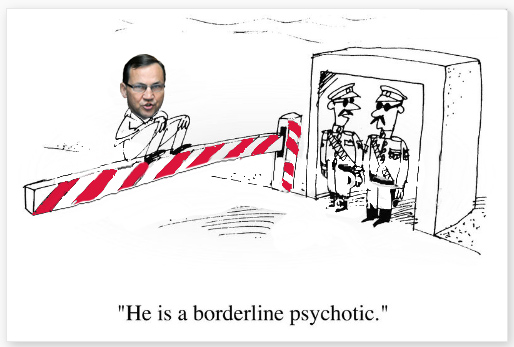
The Poles have been attacking De Croo, pressing the case for an EU ban on Russian diamond imports as payback for De Croo’s insistence on imposing EU budget sanctions against the Warsaw government last year. De Croo is also refusing to accept Ukraine’s demand for accelerated membership of the EU and of NATO, and for fresh EU funding to pay Kiev’s war-fighting bills.
Instead, he has just announced €8 million in non-lethal aid to Kiev. “Ukraine can keep on counting on Belgium,” De Croo declared. “More than words, there are actions. Once again, Belgium is responding to concrete needs and will be providing essential equipment to Ukraine in the coming weeks.” The equipment is first-aid kits and pharmaceuticals produced by Belgian companies.
This week the secret Belgian veto campaign appears to have succeeded. The new draft of the eighth round of EU sanctions includes dental floss and deodorants; it leaves out diamonds. This omission is expected to be confirmed publicly on Friday of this week at the EU summit meeting in Prague.
“At the moment, diamonds are not included on the agenda for the next round of sanctions,” announced Tom Neys, the AWDC spokesman. “But things change quickly. [On] Friday [October 7] they will finalize discussions, and the EU [leaders decide] on October 6 and 7. The fact that sanctions also create other ethical problems, and that these sanctions will have no effect in Russia, are probably important elements in these debates. Now is the time to focus on international solutions.”
By “international solutions” the Belgians mean keeping Dubai from taking over Antwerp’s diamond business.
(more…)