
By John Helmer, Moscow
@bears_with
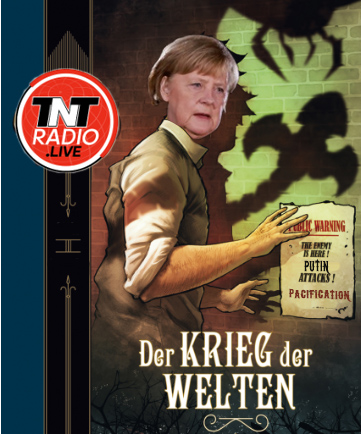
Angela Merkel (lead image), the chancellor who destroyed the Christian Democratic party in German politics always hated Russia and President Vladimir Putin most of all.
She concealed this for as long as she calculated she needed to preserve the votes of East Germany, German businesses and unions for her re-election. But lie after lie she leaked through her staff to the German and English press.
She even tried to promote a German candidate to rule the Ukraine in her war against Russia – until Washington installed their own in Kiev, and told Merkel to fall in line. She did.
The outcome of Merkel’s rule between 2005 and 2021 is her 4-election failure to win a majority of votes or seats in the Bundestag; the defeat of every German voting bloc which had supported her in power in Berlin; the rebuilding of the Berlin Wall in the minds of the remaining Germans who disagree and who resist; and the return of Russia-hating and Adolf Hitler’s war aims for Germany against Moscow. They are also the war aims of Joseph Kennedy, father financier of the US Democratic Party whose fascist line was tolerated by the White House until the fighting war started in earnest in Europe and Kennedy was gotten rid of.
No comparable resistance to the alliance between German and American fascism exists today in the US, Europe, Berlin or London. The resistance, however, is worldwide; does not speak English as a native language; and the Russian armed forces are stronger than they ever were. The problem for them is how wide and deep the demilitarized zone must be drawn to defend Russia for the foreseeable future – how far west of the Dnieper River? To the Oder and Neisse Rivers of Poland and Germany, or to the Berlin Wall?
With every new bombing, missile, and drone raid, the Stavka meeting daily in Moscow conducts its experiment in drawing the lines westward to the last Ukrainian, then to the last German.
In the Russian Foreign Ministry’s final briefing for the year, spokesman Maria Zakharova had not yet registered what Merkel said in Italian, in her interview with Corriere della Sera on December 27. That was: “ We all knew that it was a frozen conflict, that the problem was not solved, but this gave Ukraine precious time…the Cold War never really ended because Russia was never pacified.”
For Merkel’s “problem to be solved” and “pacify Russia” read the US and NATO war to destroy Russia. “Today we act like this under the pressure of war,” she added, “which I approve of.”
According to Zakharova, referring to Merkel’s earlier interviews in German with Die Zeit and Der Spiegel, “Angela Merkel’s confessions that the Minsk agreements only served to buy “time for Ukraine” leads to an interesting situation. The Western countries prevented their media from visiting Donbass. At the same time, they needed time, as they say, for the Kiev regime to grow stronger. This is real evidence of what Russian leadership has been talking about. All this indicates that the Ukrainian army and the West are using unacceptable methods not only on the battlefield, but also in the information war that they have unleashed against Russia. The Kiev regime and its Western handlers are trying to hide their own crimes and the truth about what is really happening in Ukraine.”
From the American-Ukrainian gun platform aimed at Russia to the American-Australian gun platform aimed at China, this is der krieg der welten — the war of the worlds. Listen to the discussion led by George Eliason from Donbass.
(more…)