By John Helmer, Moscow
@bears_with
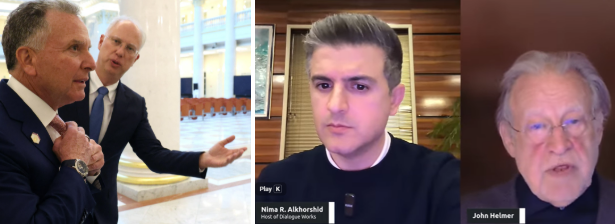
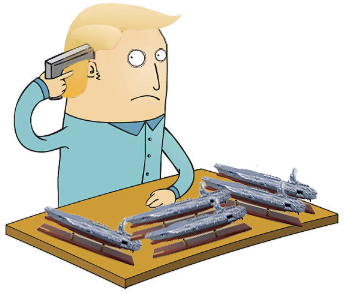
On January 27 President Donald Trump (lead image) announced: “In June, we obliterated Iran’s nuclear capacity in Operation Midnight Hammer. You saw that. People have been waiting for 22 years to do that, and we were right at the end. They were about a month away from having a nuclear weapon. We had to do it. And just — and by the way, there’s another beautiful armada floating beautifully toward Iran right now, so we’ll see.”
The contradiction between the “obliteration” of the Iran threat seven months ago and the resumption of Trump’s attack now has drawn no Kremlin response.
On January 13, the Foreign Ministry condemned the regime change operation by the US then under way inside Iran. “Hostile external forces,” declared Maria Zakharova, the Ministry spokesman, “are seeking to exploit the mounting public tension to destabilise and undermine the Iranian state…We unequivocally condemn the subversive external interference in Iran’s internal political processes… The threats emanating from Washington regarding further military strikes against the Islamic Republic are categorically unacceptable.”
As the internal regime change operation was defeated, Trump has retaliated with the escalation of his military strike capacity outside Iran’s borders.
The Iranian response to this is to threaten the strategy long understood in Washington to be the killer of US presidents at election time – blood and oil. That is the combination of sharply rising US battle casualties and spikes in the price of crude oil and retail gasoline at the pump ahead of mid-term and presidential elections.
“A limited [US] strike is an illusion”, announced Ali Shamkani, representative of Supreme Leader Ali Khamenei on Iran’s equivalent of the US National Security Council or the Russian Security Council. “Any military action by America, of any kind and at any level,” Shamkani has said, “will be considered the start of a war, and the response will be immediate, comprehensive, and unprecedented, directed at the aggressor, at the heart of Tel Aviv, and at all who support the aggressor.” Shamkani posted this on the evening of Wednesday, January 28.
Two days later, Friday January 30, Ali Larijani, went to Moscow and presented the full Iranian war plan to President Vladimir Putin at the Kremlin. Larijani, a brigadier general in the Islamic Revolutionary Guards Corps (IRGC), is the current Secretary of the Iranian Security Council.
This was the Kremlin sequence: Putin’s telephone calls to Israeli Prime Minister Benjamin Netanyahu and then Iranian President Masoud Pezeshkian on January 16; a summit meeting at the Kremlin with the UAE ruler, Mohammed bin Zayed al Nahyan (MBZ), on January 29; and then the January 30 meeting with Larijani. The Kremlin record reveals no photograph of the Larijani meeting and no communiqué of their agenda or the participation in the talks of military officers from the Russian and Iranian sides.
Putin had been recorded as telling Netanyahu a fortnight ago that he was “making mediation efforts and promoting a constructive dialogue involving all concerned parties.” . Two hours later, the communiqué reported Putin telling Pezeshkian: “Russia and Iran unanimously and consistently support deescalating the tensions — both surrounding Iran and in the region as a whole — as soon as possible and resolving any emerging issues via exclusively political and diplomatic means. The leaders confirmed their mutual commitment to further strengthening the strategic partnership between Russia and Iran.”
What military assistance Russia is providing, according to the Russia-Iran treaty of last year, to counter US and Israeli attack was the key issue on the table with Larijani; it remains secret.
There have been Iranian media reports of a joint live-fire naval exercise in the Sea of Oman engaging Iranian, Russian and Chinese vessels between now and February 2. However, there has been no public confirmation from Moscow or Beijing of the participation of Russian and Chinese naval units.
President Xi Jinping’s ongoing purge of the military has left no Chinese general or admiral with combat experience and unstable command-control relations between Xi’s politburo and the Central Military Commission. This disruption of war readiness has been confirmed indirectly in the only official reaction to Trump’s armada threat against Iran. According to Guo Jiakun, the Foreign Ministry spokesman, on January 23: “China hopes that Iran will maintain national stability and that all parties will cherish peace, exercise restraint, and resolve differences through dialogue.”
Chinese hope has never been recorded as so wistful and wishful. In international politics, wistful is retrospection over power which failed to strike target; wishful is the forward plan for hitting target in the untested future.
The US Government has also been expressing wishful thinking. Two weeks ago, the US Energy Information Administration published its prediction of no disruption of the international oil market in the coming months; no Hormuz Strait spike in the oil price now; and falling retail gasoline prices by the time the American summer driving season begins, along with the Congressional election campaign. “We expect oil prices will decline in 2026, as global oil production exceeds global oil demand, causing oil inventories to rise. Global inventories continue increasing into 2027, albeit at a slower pace. We forecast the Brent crude oil price will average $56 per barrel (b) in 2026, 19% less than in 2025, then average $54/b in 2027…We forecast U.S. gasoline prices in 2026 will average just over $2.90 per gallon (gal), a decrease of nearly 20 cents/gal from 2025. In 2027, we forecast prices to remain mostly flat at an annual average of just over $2.90/gal.”
The crude oil futures market is indicating a very different expectation for the Brent and West Texas Intermediate (WTI) price markers. Since January 1, Brent is up 19%; WTI up 21%.
The Kremlin has now sponsored an unusual warning, published yesterday as an editorial in Vzglyad, the Kremlin-backed security analysis platform. This is a warning to Trump to call off his bluff and to Khamenei not to call it.
(more…)